

Reduce Labor Costs and Improve Cost-Efficiency in Wood Pallet Production
Minimizing manual labor needs through automation in wood pallet nailing
Wood pallet nailing systems that are automated take away most of the need for people to do the work manually since they handle everything from putting nails in place all the way through to finishing the assembly without anyone standing around watching. Instead of needing several workers who used hammers, positioned parts, and checked each pallet individually, companies can now run their operations much smoother and save about 40% on labor expenses as some industry reports suggest. What happens next is pretty interesting too. The workers who were doing this kind of repetitive task get moved into better positions where they supervise what's going on or make sure quality standards are met. This means businesses get more value out of their staff and spend less time and money training new people for basic tasks.
Measurable efficiency gains: 60–75% increase in output after automation
Factories that implement automation typically see their production jump anywhere from 60 to 75 percent. Automated nailing machines just keep going nonstop without slowing down for lunch breaks or getting tired like human workers do. This constant operation means manufacturers can handle bigger order volumes and actually deliver products on time when customers need them. The bottom line? Factories run smoother, produce more goods, and save money in the long run while maintaining quality standards across all those extra units being made.
Calculating ROI: cost-effectiveness of automated nailing systems over time
The upfront cost of getting automated nailing equipment can definitely hurt the wallet at first glance, but most businesses start seeing their money back within about a year and a half. Labor costs drop substantially, mistakes become much rarer, and the shop just plain produces more stuff in the same amount of time. Looking ahead, companies save even more because there's way less wasted materials lying around and machines don't break down as often as manual tools do. Think about it this way too products come out looking better every time, which matters when scaling up operations. For manufacturers who want to grow without breaking the bank, these automated systems make real financial sense over the long haul.
Maximize Output with High-Speed, Consistent Wood Pallet Assembly
Achieving High Processing Capacity for Large-Scale Wood Pallet Production
Today's automated nailing systems use sophisticated servo motors along with programmable logic controllers to reach impressive speeds between 80 to 120 cycles each minute. With this kind of speed boost, factories can crank out around 1,200 standard pallets throughout an entire 8 hour workday, which is about three times what workers could manage manually back in the day. The built-in auto stacking function really cuts down on those annoying pauses when switching batches, so production just keeps rolling without hiccups. These kinds of machines are becoming must-haves for any operation that needs to keep up with massive order volumes day after day.
Precision Engineering for Consistent Nail Placement and Product Quality
These machines place nails really accurately, within just half a millimeter of where they should go. That means all the pallets look the same and have fewer problems with their structure. Compared to people using hammers, these machines are way more consistent. Manual work always has some variation, but these automated systems produce pallets that meet building codes and last longer. When each nail goes in at exactly the right depth and angle, it makes the whole thing stronger for carrying heavy loads. Pallets made this way don't get damaged as easily when they're shipped around. Companies end up with better quality products overall, which means less time spent fixing mistakes and not so many complaints from customers who received damaged goods.
Cycle Speed Optimization and Continuous Operation Advantages
When it comes to getting the most out of automated nailing systems, optimizing cycle speed is pretty much essential for keeping them running at top form during long production runs. These machines don't get tired like humans do, so they can keep going almost non-stop and fit right into those round-the-clock manufacturing setups many factories run these days. The touchscreen controls make it easy for workers to tweak things on the fly - adjusting where the nails go and how fast the system cycles through tasks without needing to stop everything down. And this kind of adaptability really matters when markets shift suddenly. Manufacturers can scale up or down quickly while still saving on energy costs and making sure their equipment lasts longer than it would otherwise.
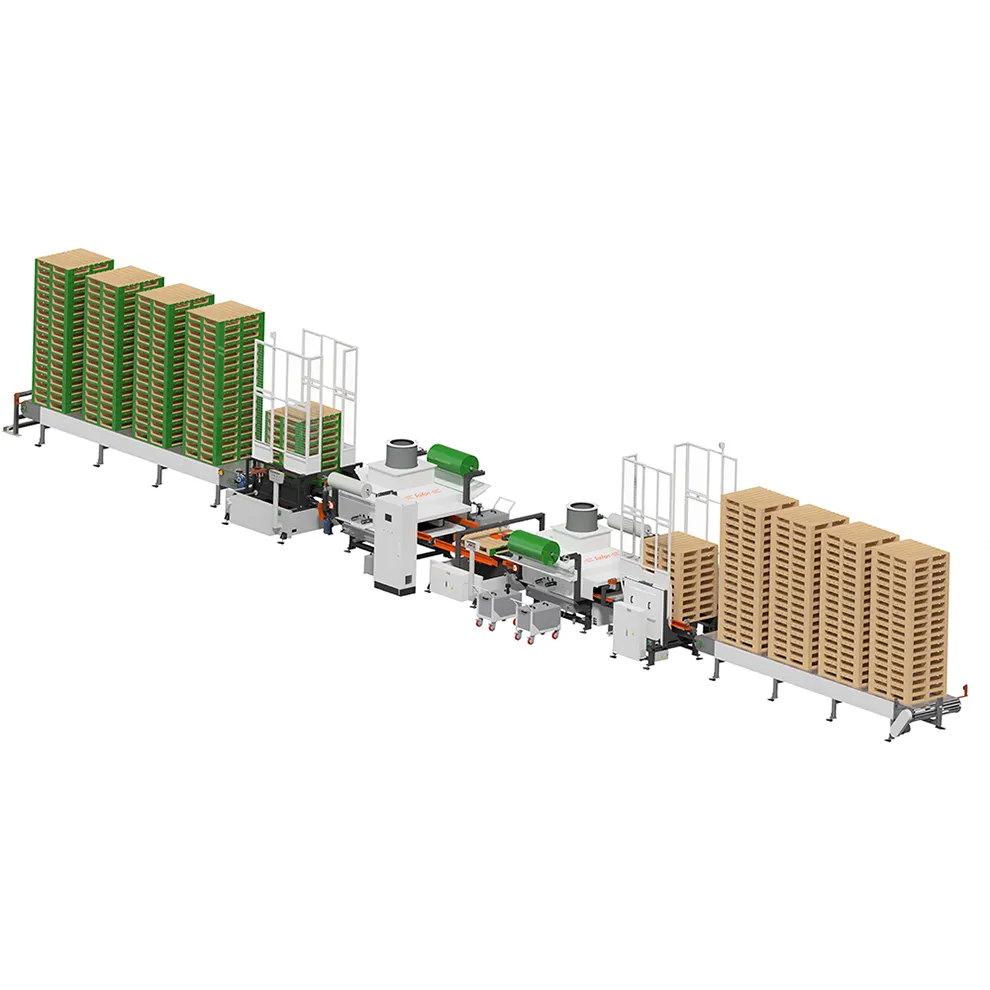
Simplify Operation with Advanced PLC and Touch Screen Controls
User-friendly interface: managing wood pallet workflows via touch screen PLC
Today's automatic wood pallet nailing machines come with touch screen PLC interfaces that make operating them much easier than older models. According to industry reports from 2024, these new systems cut down on training time for operators by around 35%. Workers just need to tap and swipe through menus to set up different nailing patterns, tweak machine settings, and keep track of how many pallets get made each hour. The dashboards show everything from how many stacks have been completed to where nails are placed on each pallet. Even someone who has never worked with this equipment before can handle complicated tasks after just a short orientation session. No fancy technical skills required anymore thanks to these user friendly controls.
Key components: servo motors, auto-stacking, and real-time monitoring
What makes this system so efficient and user friendly is how all the main parts work together seamlessly through PLC control. Take those high performance servo motors for instance they really nail down precise positioning and get things moving fast. Then there are those auto stacking mechanisms that make handling products after processing much smoother. The real game changer though is the real time monitoring system. It keeps an eye on everything from machine condition to what's being produced and even spots problems before they actually happen. Operators get alerts when something looks off, which means fewer unexpected shutdowns. All these tech features combine into one smart system that keeps running longer between maintenance stops and makes everyday operations way less complicated for plant staff.
Enhance Workplace Safety in Wood Pallet Manufacturing
Reducing injuries by eliminating manual hammering and repetitive strain
Working with manual nail guns can be really dangerous business. Workers often end up with hand injuries when hammers slip, get poked in the eyes by stray nails, or suffer cuts from flying wood chips. Looking at the numbers tells another story too many folks don't want to hear repetitive strain issues make up almost a third of all workplace problems in old school woodworking shops. That's why so many manufacturers are turning to automated nailing solutions these days. These machines take people completely out of the equation when it comes to handling those sharp tools and metal fasteners during what remains one of the riskiest parts of any production line. Beyond just preventing accidents on site, companies also see their insurance costs drop over time while employees report feeling better physically after switching away from constant manual labor demands.
How automation removes workers from high-risk nailing operations
Modern nailing systems come equipped with sealed work areas and safety locks that stop people from getting near moving parts while the machine is running. Workers handle everything from remote control panels located away from the actual machinery, so they don't have to step into hazardous zones during operation. The way these systems are set up keeps staff safe and helps build a workplace environment where safety standards aren't just followed but actually become part of daily routine. Plus, it means crews can spend their time checking for quality issues and making sure things run smoothly rather than dealing with the physical strain of traditional nailing methods.
Scale Seamlessly and Integrate into Existing Wood Pallet Production Lines
Adapting Automatic Nailing Machines to Growing Production Demands
Modern nailing machines are built to last and grow with businesses over time through their modular design. When manufacturers need more functionality, they simply attach additional components. For instance, some add special units that condition timber before nailing, which matters a lot when working with moisture sensitive hardwoods. Others install RFID embedders so products can be tracked throughout production, something particularly useful in tightly controlled sectors like pharmaceutical manufacturing. The real advantage here is scalability. Companies don't have to throw away what they already own just to move forward. They can gradually expand into new markets or boost production capacity piece by piece, saving money on big upfront investments while still keeping pace with changing demands.
Smooth Integration with Current Assembly Lines and Workflow Optimization
Most automated nailing systems fit right into existing production setups because they work with standard conveyor belts, rotating tables, and stackers that many factories already have. These machines take up surprisingly little room on the shop floor, which is a big plus for manufacturers dealing with tight spaces. The system handles everything from loading raw materials to putting finished products onto pallets without much manual intervention needed in between. When companies install these systems, there's usually not much downtime since most just need minor adjustments to existing processes. That's why so many plants see results pretty quickly after installation, often within weeks rather than months.
FAQ Section
What is the typical increase in output after implementing automation in pallet production?
Manufacturers generally see an increase in output ranging from 60% to 75% after implementing automated systems.
How long does it take to achieve ROI on automated nailing equipment?
The return on investment typically comes within 1.5 years due to savings in labor costs and reduced material wastage.
What are the advantages of using touch screen PLC controls in wood pallet nailing machines?
Touch screen PLC controls offer a user-friendly interface, reducing training time by 35% and allowing easy management of workflows and machine settings.
How do modern automated nailing systems enhance workplace safety?
The systems reduce risks associated with manual hammering, offer sealed work areas, and allow operation through remote control panels which keep workers away from hazardous zones.
How much can labor costs be reduced by automating wood pallet production?
Automation in wood pallet nailing can reduce labor costs by about 40% by minimizing the need for manual labor and reallocating workers to supervisory roles.
Table of Contents
- Reduce Labor Costs and Improve Cost-Efficiency in Wood Pallet Production
- Maximize Output with High-Speed, Consistent Wood Pallet Assembly
- Simplify Operation with Advanced PLC and Touch Screen Controls
- Enhance Workplace Safety in Wood Pallet Manufacturing
- Scale Seamlessly and Integrate into Existing Wood Pallet Production Lines
-
FAQ Section
- What is the typical increase in output after implementing automation in pallet production?
- How long does it take to achieve ROI on automated nailing equipment?
- What are the advantages of using touch screen PLC controls in wood pallet nailing machines?
- How do modern automated nailing systems enhance workplace safety?
- How much can labor costs be reduced by automating wood pallet production?