
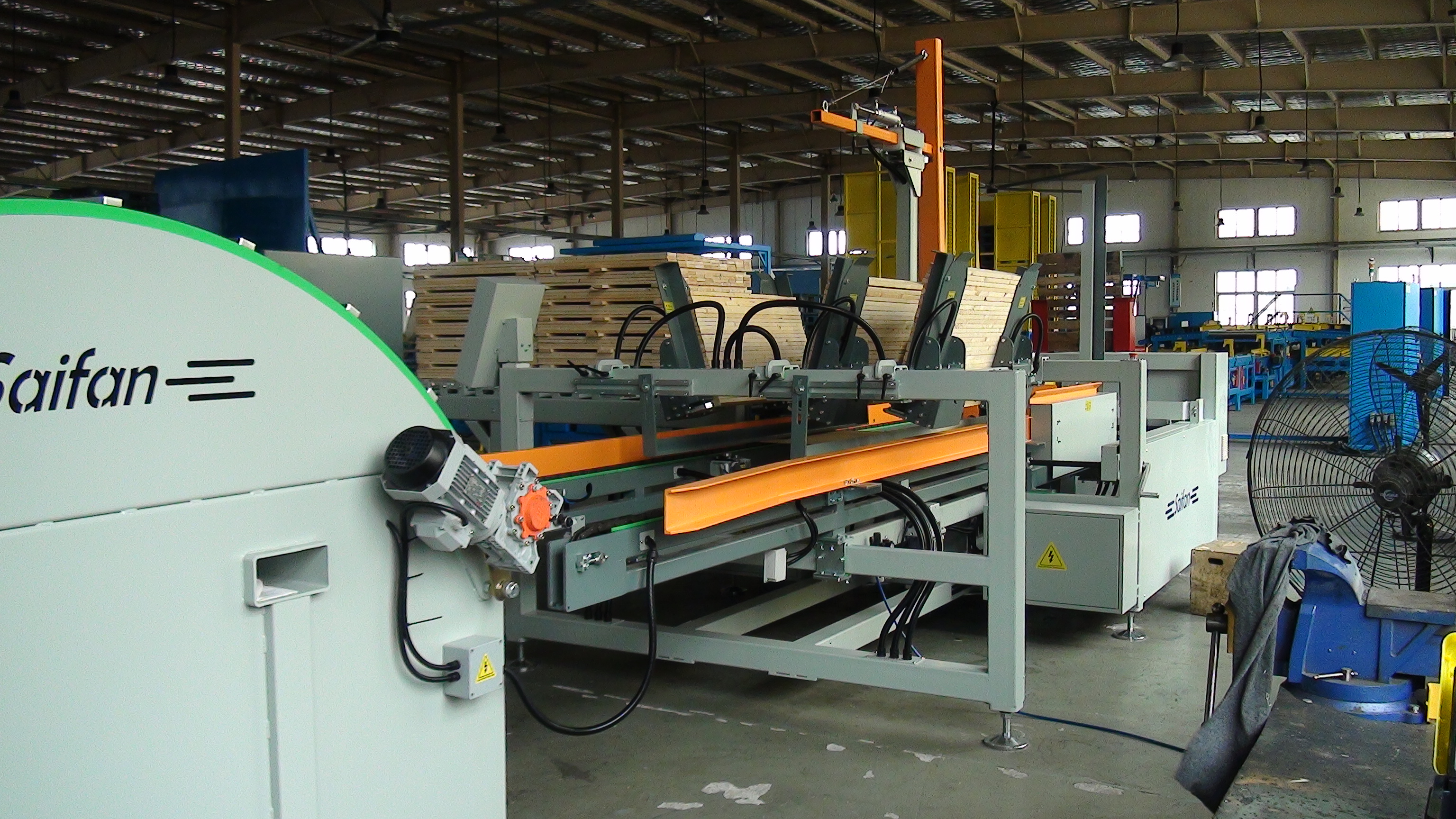
The integration of a pallet stacking machine into your assembly nailing line represents a critical operational decision for modern manufacturing facilities. This process connects two essential production stages—nailing assembly and pallet handling—into a seamless workflow that reduces manual labor, improves safety, and maximizes throughput. Understanding how to properly link a pallet stacking machine to your assembly nailing lines ensures that finished products flow smoothly from the assembly stage to storage and shipping without bottlenecks or quality degradation.
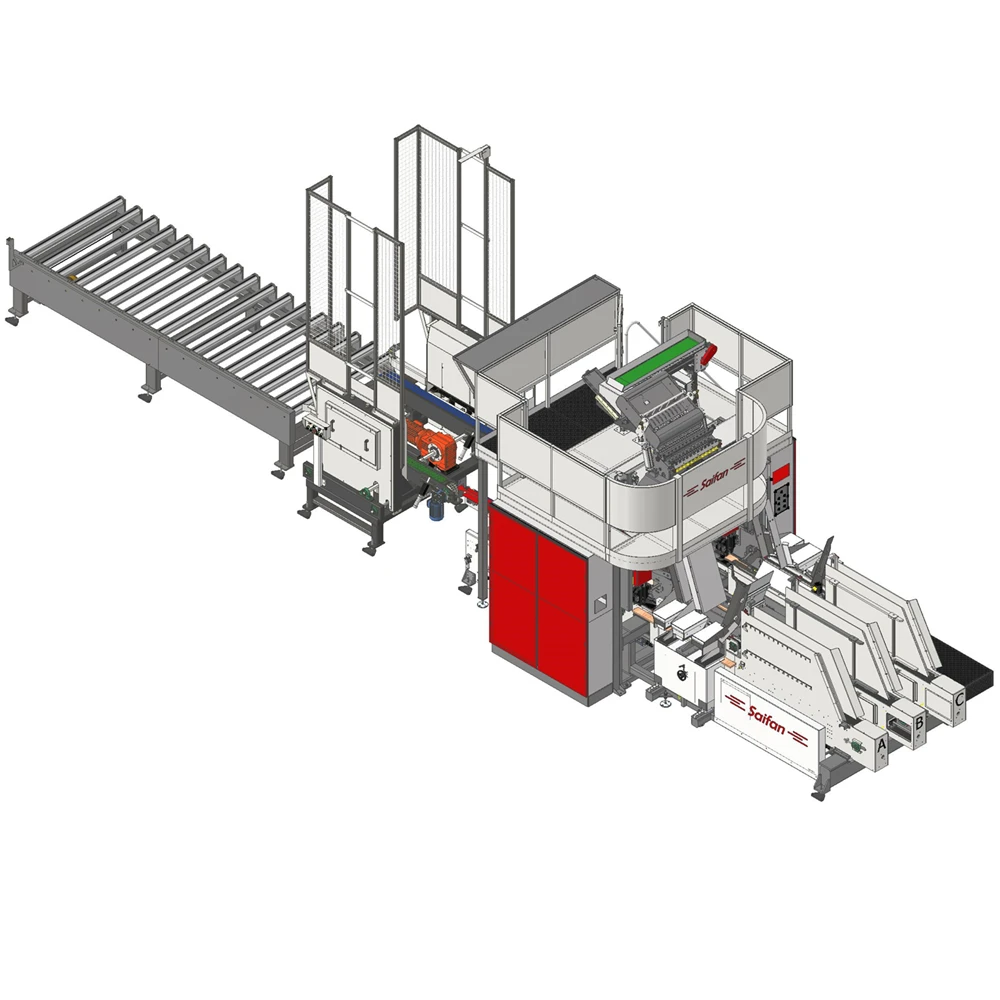
Industrial facilities that fail to properly integrate a pallet stacking machine with their assembly nailing lines face significant productivity losses, increased labor costs, and inconsistent output quality. The right integration approach depends on your current line layout, production volume, product dimensions, and facility constraints. This guide explores the technical and operational considerations necessary to successfully link a pallet stacking machine to your assembly nailing lines and achieve optimal production performance.
Understanding the Core Connection Between Assembly Lines and Stacking Solutions
Why Integration Matters for Production Flow
A well-designed pallet stacking machine connection transforms your assembly nailing line into a fully automated production ecosystem. When your pallet stacking machine sits disconnected from the assembly process, workers must manually transfer completed products, leading to delays, damage, and inconsistent palletization. By linking a pallet stacking machine directly to your nailing assembly line, you create a continuous workflow where finished assemblies automatically feed into the stacking system. This integration eliminates handoff points, reduces operator fatigue, and improves safety by removing manual material handling from the production process.
Key Technical Considerations for Machine Linking
Linking a pallet stacking machine to your assembly nailing line requires careful attention to several technical factors. The transfer speed of your assembly line must match the intake capacity of your pallet stacking machine, or you risk creating bottlenecks in either direction. Product dimensions and weight specifications must be compatible with both the nailing assembly output and the pallet stacking machine input specifications. Conveyor system alignment, height coordination, and buffer storage capacity all influence whether a pallet stacking machine integration succeeds or creates operational complications.
Structural and Mechanical Integration Methods
Direct Connection Through Conveyor Systems
The most common approach to linking a pallet stacking machine to assembly nailing lines involves installing an intermediate conveyor system that transfers finished products from the assembly line directly to the pallet stacking machine infeed. This method ensures controlled product flow, reduces product damage, and allows for quality inspection between stations. Your conveyor system should include sensors that communicate with both the assembly line controller and the pallet stacking machine to regulate speeds and prevent overflow. The pallet stacking machine can then automatically arrange products according to your specifications—layer by layer, pattern by pattern—and deposit them onto pallets for storage or shipment.
Buffer Storage and Queue Management
Most modern manufacturing environments benefit from incorporating buffer storage between the assembly nailing line and the pallet stacking machine. This intermediate storage allows your assembly line to maintain continuous operation even if the pallet stacking machine requires brief maintenance or pallet changes. A properly sized buffer prevents the pallet stacking machine from becoming a production bottleneck while accommodating minor speed variations between the two systems. Automated queue management systems communicate with both the assembly line and the pallet stacking machine to optimize material flow and maintain consistent production rates.
Operational Workflow and Performance Optimization
Synchronizing Production Rates and Scheduling
Successfully linking a pallet stacking machine to your assembly nailing line depends fundamentally on matching production rates across both stages. Your assembly nailing line must produce finished products at a rate that your pallet stacking machine can process without creating delays or requiring constant operator intervention. During shift planning, coordinate maintenance windows for both systems to prevent unexpected production interruptions. When your pallet stacking machine completes a pallet, operators should have the next empty pallet positioned and ready to minimize dead time. Real-time production monitoring software allows supervisors to adjust line speeds dynamically if one stage falls behind the other.
Quality Control and Product Handling
The transition point where products leave your assembly nailing line and enter the pallet stacking machine requires rigorous quality standards. Ensure that your nailing assembly produces consistent product dimensions and weight, as variations can cause the pallet stacking machine to misalign or damage items during stacking. Implement automated inspection systems at the conveyor transfer point to detect defects before products reach the pallet stacking machine. The pallet stacking machine itself should include product orientation sensors and pressure-sensitive grippers to handle items gently regardless of surface finish or material composition. Regular maintenance of the pallet stacking machine brushes, grippers, and alignment mechanisms prevents product damage and ensures consistent palletization patterns.
Integration Software and Control Systems
Communication Protocols and Automation
Modern pallet stacking solutions rely on advanced control systems to coordinate seamlessly with assembly nailing line equipment. Your pallet stacking machine must communicate with the assembly line controller through industrial protocols such as Modbus, EtherCAT, or OPC-UA to synchronize operations and respond to production changes. Programmable logic controllers manage the handoff between systems, ensuring that your pallet stacking machine receives products only when ready to process them. When the pallet stacking machine reaches capacity or completes a pallet, the system automatically signals the assembly line to pause, preventing product accumulation and damage.
Data Tracking and Production Analytics
Linking a pallet stacking machine to your assembly nailing line through an integrated software platform enables comprehensive production tracking and performance analytics. Your pallet stacking machine controller captures data on cycle times, stacking patterns, pallet counts, and downtime events that feed into facility-wide reporting systems. This visibility allows management to identify bottlenecks, optimize production schedules, and predict maintenance requirements before the pallet stacking machine fails unexpectedly. Integration with enterprise resource planning systems ensures that product availability aligns with shipping schedules and customer orders, improving supply chain reliability.
Troubleshooting Common Integration Challenges
Addressing Speed Mismatches and Bottlenecks
If your assembly nailing line produces faster than your pallet stacking machine can process, products accumulate on the transfer conveyor, creating safety hazards and potential quality issues. Conversely, if the pallet stacking machine operates faster than your assembly line supplies products, the stacking equipment sits idle and reduces overall facility productivity. Resolving these speed mismatches requires adjusting conveyor speeds, increasing buffer capacity, or upgrading to a higher-capacity pallet stacking machine if production volumes have increased. Many facilities benefit from installing variable frequency drives on conveyor motors, allowing real-time speed adjustment based on production demand and system load.
Mechanical Alignment and Product Orientation
Products leaving your assembly nailing line must arrive at the pallet stacking machine in consistent orientation and alignment to enable accurate stacking and palletization. Misaligned products cause the pallet stacking machine grippers to fail or damage items, reducing throughput and requiring manual correction. Install guide rails or edge-detection sensors on the transfer conveyor to maintain product alignment throughout the handoff. The pallet stacking machine should include adjustable product positioning features that accommodate minor variations in item dimensions without requiring full recalibration between production batches.
FAQ
What is the typical cost of linking a pallet stacking machine to an assembly line?
The cost of integrating a pallet stacking machine with your assembly nailing line varies based on your current facility layout, production volume, and automation level. Simple installations connecting an existing pallet stacking machine to a nearby assembly line through a basic conveyor system typically cost between $50,000 and $150,000, while complex integrations involving buffer storage, advanced control systems, and significant facility modifications can exceed $300,000. Additional expenses include engineering design, installation labor, software customization, operator training, and ongoing maintenance contracts for the pallet stacking machine. Most manufacturers recover their investment within 18 to 36 months through improved efficiency, reduced labor costs, and increased production capacity.
How long does it take to implement a pallet stacking machine integration project?
Implementing a pallet stacking machine connection to your assembly nailing line typically requires 8 to 16 weeks from project initiation to full production startup. This timeline includes facility assessment and design (2-3 weeks), equipment procurement (3-4 weeks), physical installation and wiring (2-3 weeks), software programming and testing (1-2 weeks), operator training (1 week), and final debugging and optimization (1-2 weeks). Existing pallet stacking machine relocations tend to be faster than new installations, while projects requiring significant facility modifications or custom conveyor systems extend the overall schedule. Working with experienced integrators familiar with your assembly line model reduces implementation time and minimizes production disruption.
Can an older assembly line be retrofitted with a modern pallet stacking machine connection?
Yes, most existing assembly nailing lines can be retrofitted with a modern pallet stacking machine integration, though older equipment may require intermediate upgrades to communication and control systems. Your facility should conduct an assessment of your assembly line's current automation level, conveyor capabilities, and electrical infrastructure before committing to a pallet stacking machine retrofit project. Facilities with older pneumatic or hydraulic control systems may need to install modern programmable logic controllers to enable proper communication with a pallet stacking machine. Conveyors may require speed adjustment capability or sensor upgrades to work effectively with the pallet stacking machine, adding to project scope and cost.