
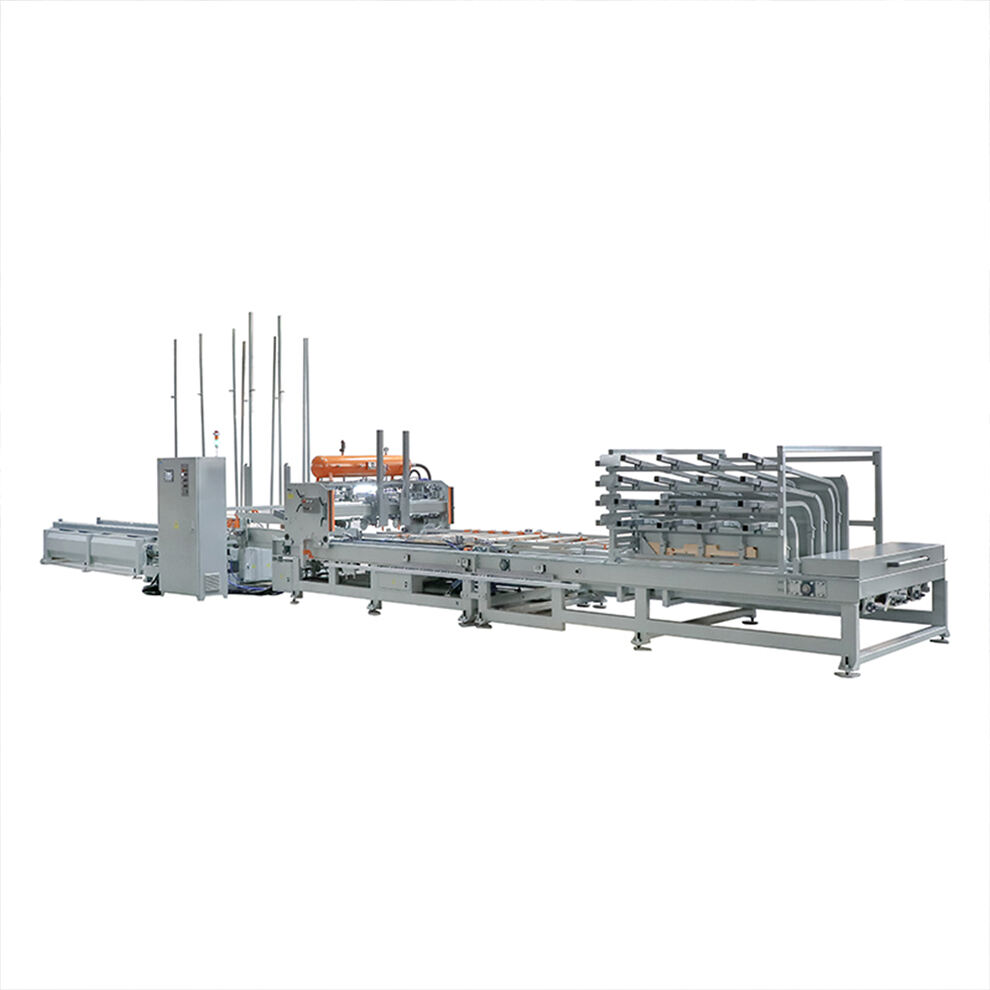
Why Conveyor Automation Is Essential for Modern Wooden Pallet Production Lines
Conveyor automation gets rid of those pesky manual handling bottlenecks that cause roughly 18% of all delays when making wooden pallets. Traditional approaches just can't handle the natural size differences in raw lumber very well. Automated systems keep everything moving smoothly from nailing right through to stacking, aligning materials precisely so there's less need for workers to constantly adjust things by hand. This cuts down on cycle times by around 30% too. One major auto parts manufacturer saw these benefits firsthand after upgrading their line, plus they were able to move some staff over to better quality control positions where their skills actually mattered more. The real money saver comes from preventing those crooked assemblies that account for about 12% of waste during manual work. Companies save real cash on materials and get their investment back much quicker. Plus, the built-in sensors help stop problems caused by wet wood slipping around, keeping production steady even though every piece of lumber is slightly different from the next.
Designing Wood-Specific Conveyor Systems for Reliability and Handling Safety
Addressing Dimensional Variability and Moisture-Related Slippage
Wooden pallet production demands conveyors engineered for hygroscopic, dimensionally unstable materials. Natural lumber exhibits ±3% dimensional tolerance and moisture content fluctuations (typically 15–20%), triggering alignment drift and surface slippage on generic systems. Reliable wood-handling conveyors incorporate:
- Textured belts rated for coefficient-of-friction 0.8 when wet
- Dynamic tracking systems that auto-adjust guide rails for width variations up to 4 inches
- Moisture-wicking belt materials to prevent adhesive failure during humid conditions
Modular Belt Configurations with Low-Pressure Accumulation Zones
Plastic modular conveyor belts with those interlocking segments actually work better than metal ones when handling wood products. The flexible design handles curved transfer points much easier and stands up to impacts from heavy pallet parts without breaking down. These belts come with built-in low pressure zones that cut contact force by around 40 to 60 percent. What does this mean? Less surface damage happens during inspection stops, green lumber doesn't get compressed, and those annoying nail stick outs are prevented. Wood manufacturers see about a 30% drop in board damage compared to traditional rigid roller systems. This kind of setup keeps materials moving smoothly all the way through quality control stations without interruptions.
Integrating Conveyors with Sorting, Stacking, and Quality Control Stations
Eliminating Manual Sorting Errors and Grade Misclassification
When workers sort wooden pallets manually, around 15 to maybe even 20 percent end up misclassified because people get tired and grading standards aren't always consistent across shifts. Putting barcode readers or RFID scanners right on the conveyor belts changes everything though. These systems automatically sort each pallet based on wood quality, size measurements, and how they need to be assembled. This stops expensive mistakes where high quality pallets accidentally get sent down the wrong line for cheaper products. Plus it cuts down on sorting labor costs by roughly 40 percent according to industry reports from last year. What's really impressive is how fast these automated systems work too. They can check every single pallet against quality standards continuously while moving through the facility at over 120 units per hour without slowing down production.
Vision-Guided Diverters and Load-Cell Verification for Real-Time QC
Today's conveyor systems have machine vision cameras and load cells built right into the transfer points so they can check things out in real time. The high resolution optics spot problems like cracks in wood, misaligned fasteners, and moisture damage down to about half a millimeter as pallets zoom past at 1.5 meters per second. At the same time, those built-in load cells make sure the weights are correct within plus or minus 0.2 kilograms. When something looks fishy, pneumatic diverters kick in and send the bad units off to repair stations without stopping the whole production line. This two-pronged approach cuts down on customer complaints by around 30 percent and also gathers all sorts of dimensional data that helps predict when maintenance might be needed later on.
Measuring ROI: Labor Optimization, Uptime Gains, and Payback Timelines
Quantifying conveyor automation ROI in wooden pallet production requires evaluating labor redistribution, operational continuity, and capital recovery—not just direct cost savings.
Reallocating Labor from Material Handling to Value-Add Finishing Tasks
Automation eliminates 15–20 manual handling hours weekly per operator, enabling redeployment to precision finishing tasks like custom branding or reinforced corner fitting. These value-add activities increase product margin by up to 18% while lowering ergonomic injury risk—converting fixed overhead into revenue-generating capacity without headcount reduction.
Case Evidence: 32% Uptime Increase at Midwest TimberPack Facility
A major Midwestern manufacturer achieved 98.2% conveyor uptime after automation—reducing jam-related downtime by 32% annually. Its integrated sensor network prevented 3.7 hours of daily stoppages previously caused by irregular board dimensions. The system delivered full ROI in 14 months through combined gains:
- 28% reduction in overtime costs
- 19% higher throughput during peak demand cycles
- Elimination of $86k/year in damaged product claims
These outcomes confirm how reliability-focused conveyor design accelerates payback while building scalable, future-ready production foundations.
Frequently Asked Questions
Why is conveyor automation important in pallet production?
Conveyor automation streamlines the production process by removing bottlenecks related to manual handling of materials, aligning and stacking operations more precisely, reducing cycle times, and minimizing waste.
How do automated conveyors handle variations in wood dimensions?
Wood-specific automated conveyors use textured belts and dynamic tracking systems to effectively manage dimensional variations and moisture-related slippage, maintaining stability and alignment during production.
What is the advantage of using modular belt configurations?
Modular belt configurations with low-pressure accumulation zones reduce the force on surfaces, diminishing board damage during inspection stops and preventing compression in key areas.
How do integrated sorting systems improve production accuracy?
Integrated sorting systems, using barcode or RFID technology, automate the classification and sorting process, drastically reducing manual errors and minimizing labor costs.
What are the benefits of vision-guided systems in quality control?
Vision-guided systems equipped with high-resolution optics and load cells enhance real-time quality control by detecting minute defects and ensuring weight accuracy, leading to fewer customer complaints and predicting maintenance needs.
Table of Contents
- Why Conveyor Automation Is Essential for Modern Wooden Pallet Production Lines
- Designing Wood-Specific Conveyor Systems for Reliability and Handling Safety
- Integrating Conveyors with Sorting, Stacking, and Quality Control Stations
- Measuring ROI: Labor Optimization, Uptime Gains, and Payback Timelines
-
Frequently Asked Questions
- Why is conveyor automation important in pallet production?
- How do automated conveyors handle variations in wood dimensions?
- What is the advantage of using modular belt configurations?
- How do integrated sorting systems improve production accuracy?
- What are the benefits of vision-guided systems in quality control?