
Essential Wood Pallet Manufacturing Equipment and Automation Levels
Core Machinery: Sawmills, Nailers, Stackers, and Conveyors
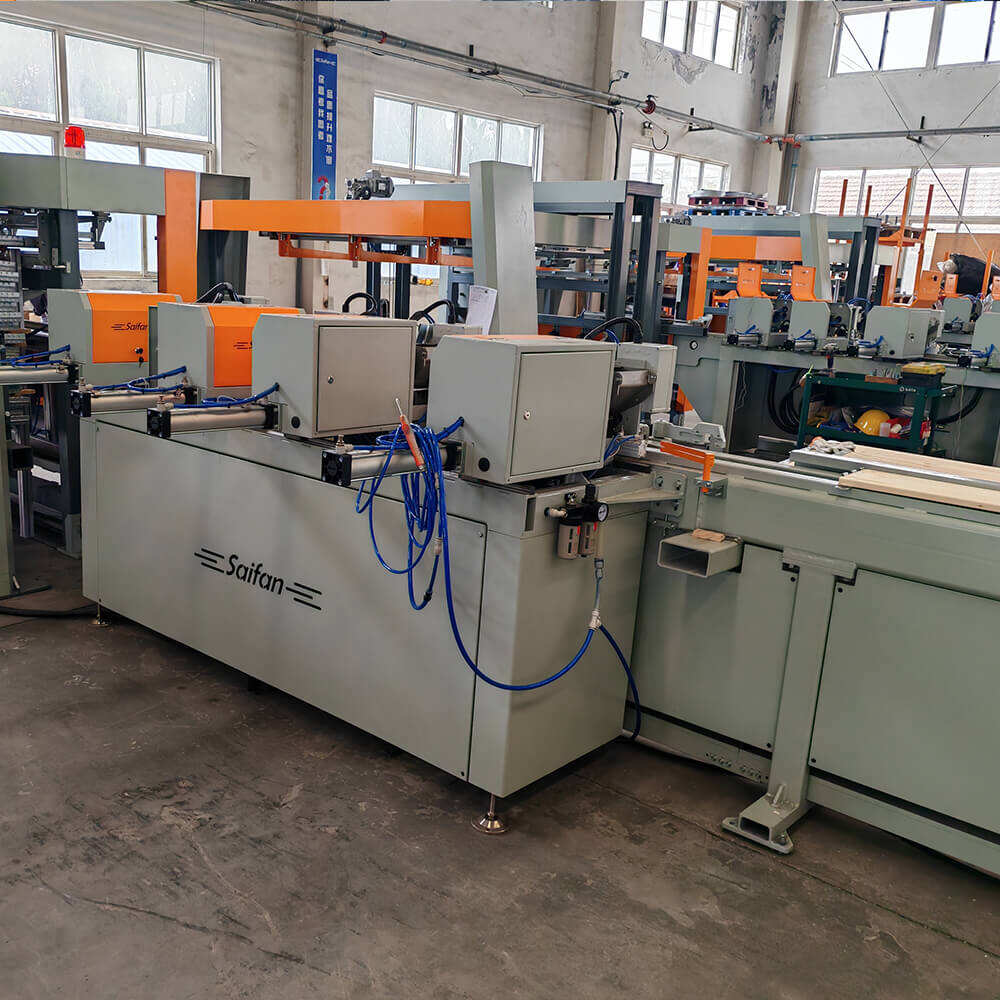
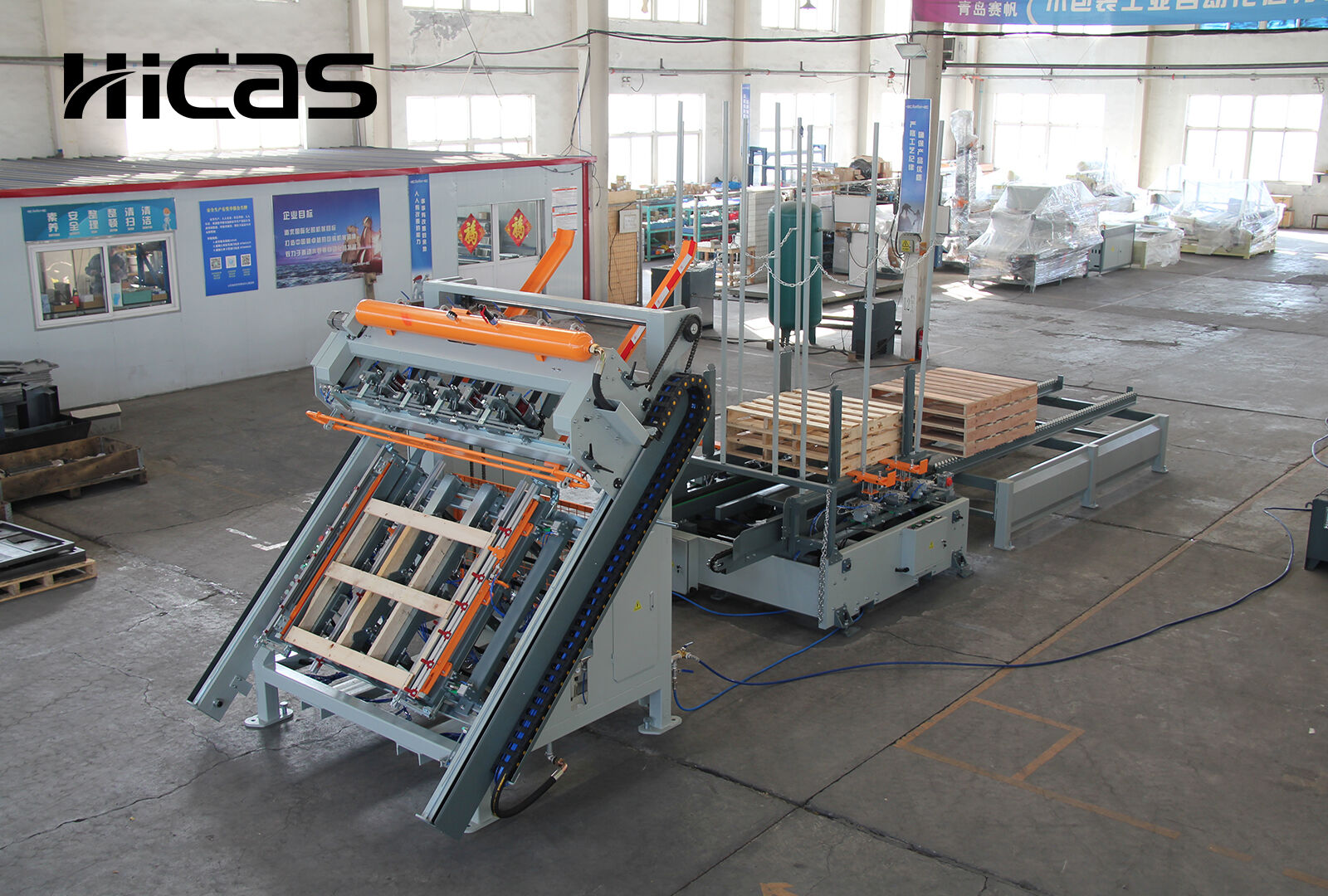
Wood pallet production lines typically depend on about four main systems working together. Let's start at the beginning where sawmills cut raw lumber into all those essential parts like deckboards, stringers, and blocks. Modern equipment with multiple blades cuts down on waste quite a bit actually around 18 percent less than what happens when workers do it manually. Next come pneumatic nailers that put everything together. These semi-automatic tools can hammer in over 200 nails each hour and they also help maintain proper ISPM-15 standards which is important for international shipping regulations. When it comes time to stack the finished products, automated systems arrange them in interlocking patterns that save warehouse space. Some facilities report saving roughly 30 percent of their storage area compared to traditional methods. Material moves smoothly between workstations thanks to roller conveyors capable of moving more than 50 pallets per hour. This not only speeds things up but also protects workers from back strain caused by heavy lifting. All these machines form the backbone of efficient operations, affecting how much waste gets generated, how many staff are needed, and whether production stays steady throughout shifts.
Tiered Automation: From Semi-Automatic Nailing to Fully Integrated Palletizing Cells
When it comes to scaling operations, automation grows alongside production volume and business objectives, generally organized into three main categories. The first category includes semi-automatic setups that handle around 30 to 60 pallets per hour. These systems rely on operators at nailing stations while using powered clamps, making them suitable for smaller operations below 5,000 weekly pallets. Moving up the scale, partially automated solutions bring in PLC controlled conveyors and automatic nail feeders, pushing hourly output past 120 units while reducing labor expenses somewhere around 40%. For maximum efficiency, full automation takes over with robotic arms placing components, visual checks on joints, and AGVs handling delivery tasks. These top tier systems can crank out over 300 pallets an hour with hardly any staff needed nearby. The step-by-step approach works well for companies looking to invest gradually rather than all at once, matching their automation needs to actual market demands and available funds without breaking the bank.
Scalable Production Line Configuration by Volume Tier
Small-Scale Lines (≤5,000 pallets/week): Compact Layouts and Modular Upgradability
For operations handling fewer than 5,000 pallets each week, flexibility and making the most of limited space becomes really important. Most shops manage just fine with compact circular saws working alongside semi automatic nail guns, letting one person handle everything inside spaces around 2,000 square feet or smaller. The good news is these setups can easily grow over time thanks to standardized connections for both mechanical parts and electrical components. This means adding things like automated conveyors fed by servos or stackers controlled through programming won't require shutting down production when needed later on. We've seen convertible conveyor systems actually cut return on investment times by about 30% during early tests, which explains why many small businesses and local distributors opt for this approach as they expand their operations step by step rather than going all in at once.
Medium-to-Large Lines (5,000–30,000+ pallets/week): Throughput Optimization and Footprint Efficiency
When operations reach around 5,000 pallets per week, having an integrated production line isn't just about moving faster anymore. The whole system needs to work reliably day after day while making efficient use of factory space. Many plants have found success with U-shaped layout designs combined with robotic stacking arms and synchronized nailing cells. These setups can produce over 120 pallets each hour and cut down on how far materials need to travel inside the facility by roughly 40% compared to straight line configurations. Plants that implement central control systems similar to what's seen in modern pallet manufacturing equipment with optimized throughput rates often see impressive results. Some report getting close to 92% overall equipment effectiveness, which is pretty much top of the class in this industry. At these volumes, managing potential bottlenecks becomes absolutely essential. Maintenance teams need to keep a close eye on drying stations and sorting gates through predictive maintenance programs because when these components fail during peak hours, it costs companies about $18k every single hour lost to downtime.
Workflow Integration and KPI-Driven Performance Management
End-to-End Workflow Mapping: From Raw Lumber Infeed to Finished Pallet Dispatch
Getting real efficiency going starts when companies map out their entire workflow digitally. Think about what happens from the moment logs go into the system all the way through cutting, nailing, checking for quality issues, and then stacking everything robotically. The conveyor belts aren't just moving stuff around either—they actually help keep everything timed properly. We've seen facilities cut down on manual labor by about half this way while keeping production rhythms stable. Quality checks happen at various points too, looking at measurements, counting nails, and making sure joints are solid before anything gets loaded onto pallets. This prevents headaches later on when defects would require fixing downstream. Plants that implement these kinds of digital maps tend to ship orders about 25% quicker and experience fewer delays overall. Experience shows us that having clear sight across every step of production isn't just nice to have anymore—it's becoming essential for staying competitive in today's market.
Critical KPIs for Wood Pallet Manufacturing: Scrap Rate, First-Pass Yield, and OEE Tracking
Three KPIs anchor performance accountability:
- Scrap Rate (target ≤5%): Reflects material loss from inaccurate cuts, warping, or handling damage
- First-Pass Yield (target ≥92%): Measures the share of pallets meeting all dimensional, structural, and ISPM-15 specs without correction
- OEE (Overall Equipment Effectiveness) (target ≥85%): A composite metric combining equipment availability, performance rate, and quality yield
Real-time OEE dashboards—tracking downtime causes, cycle time deviations, and defect trends—enable rapid root-cause response. Top-performing facilities analyze these metrics weekly to calibrate preventive maintenance (e.g., replacing saw blades before edge degradation affects cut accuracy), turning data into reliable uptime and consistent output.
Frequently Asked Questions
What is wood pallet production?
Wood pallet production involves creating wooden pallets used for shipping and storage, utilizing machinery such as sawmills, nailers, stackers, and conveyors.
Why is automation important in pallet manufacturing?
Automation enhances efficiency by reducing manual labor, minimizing waste, and increasing production capacity, thus providing a cost-effective approach.
What are the key performance indicators (KPIs) in wood pallet manufacturing?
Key KPIs include Scrap Rate, First-Pass Yield, and Overall Equipment Effectiveness (OEE), which help track production efficiency, quality, and equipment performance.