
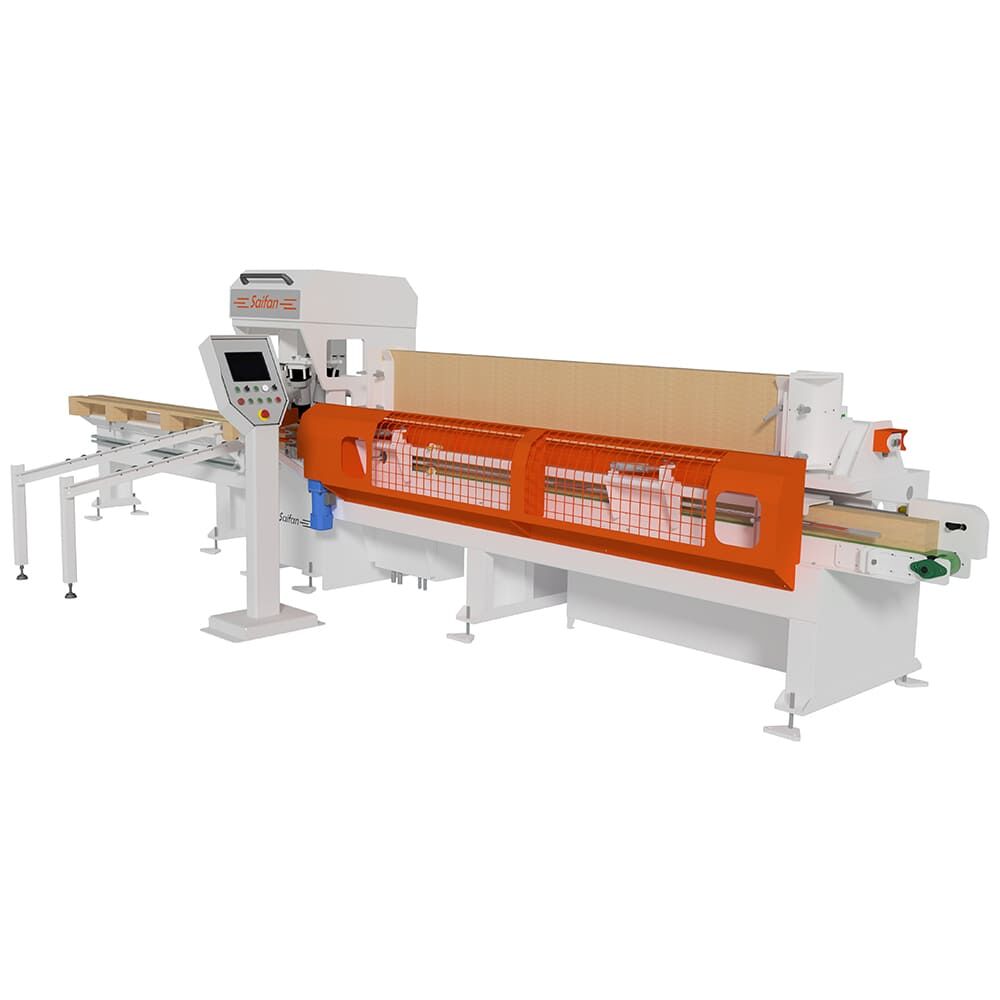
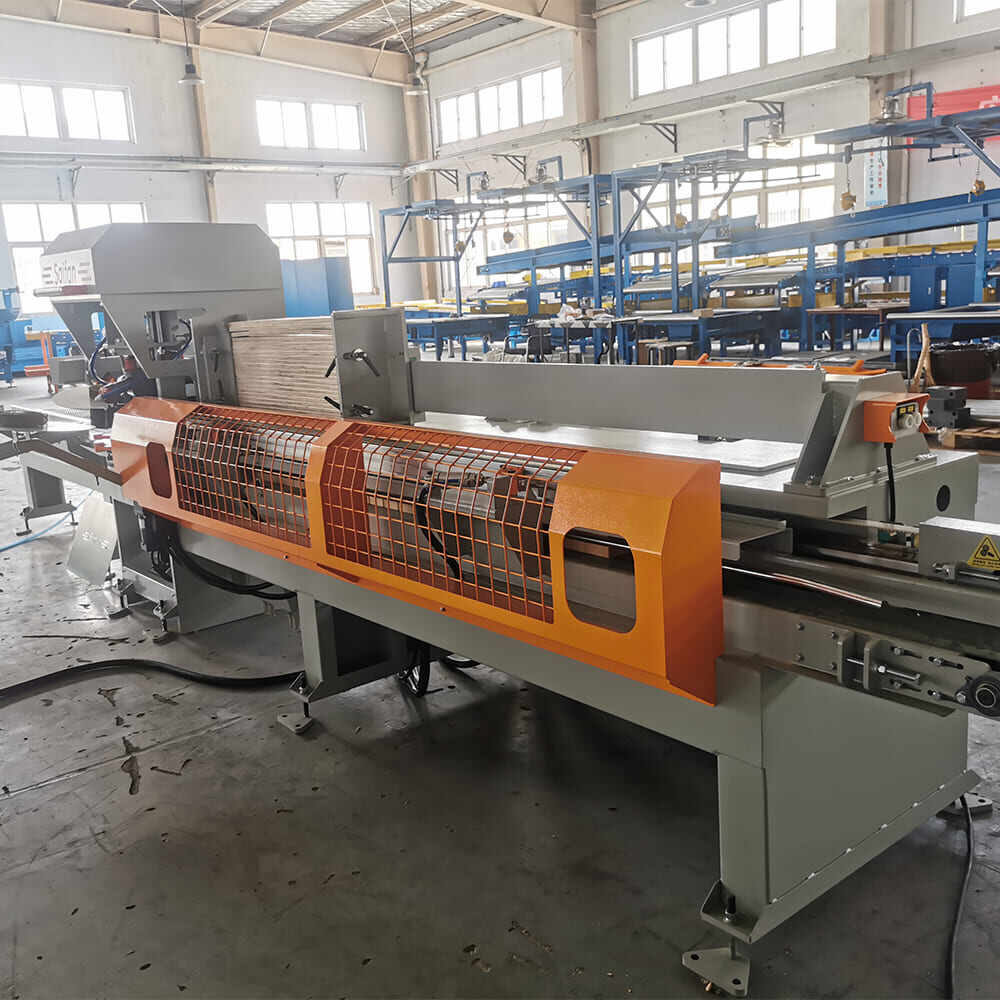
Boosting Production Efficiency with High-Speed Pallet Nailing Machines
Eliminating Assembly Bottlenecks: From Manual Labor to Fully Synchronized Automation
Switching from manual hammering to automated pallet nailing systems takes away those frustrating workflow problems that plague big operations. Back in the day, each assembly station needed three people working together one after another for positioning, nailing, and checking quality. Now with modern automation, all those steps get combined into one smooth running process. No more waiting for tired workers to slow things down. Plants that made this change are seeing their daily output jump anywhere from 60 to 75 percent. The machines have these fancy servo controls that position materials within half a millimeter accuracy, which really cuts down on wasted wood over time. Makes sense when looking at the bottom line too.
How Dual-Head Nailing and Precision Feeding Cut Cycle Time by Up to 70%
Modern pallet nailing machines now come with dual head setups and those fancy PLC controllers that really boost productivity. Manual work typically manages around 4 to 6 nails every minute, but these automated systems can knock out about 3.2 nails each second thanks to their twin nailing heads and accurate board feed mechanisms. What does this mean for actual production? Assembly times drop dramatically from roughly 90 seconds down to just under 27 seconds, which cuts processing time by about 70%. And when facilities add auto stacking to the mix, things get even better. With this setup, most shops can churn out over 1,200 standard pallets during an 8 hour workday, which is basically three times what someone could do manually.
Ensuring Structural Integrity Through Consistent, High-Accuracy Nailing
Reducing Load Failure Risk: The Impact of ±0.3 mm Nail Placement Tolerance
How accurately nails are placed really affects how long pallets last before they break down. When making large quantities of pallets, old school techniques often result in nail positions varying by more than ±2 mm. These small inconsistencies create problem spots on the pallet where all the weight concentrates when things get moved around during shipping or stacked in warehouses. The newer generation of automated nailing equipment gets much better results with tolerances as tight as ±0.3 mm thanks to lasers guiding the process and servos controlling the movement. With this kind of accuracy, every single nail goes in just right, which means fewer weak joints and stronger overall construction for those working in logistics and distribution centers day after day.
- Distributes load evenly across timber fibers
- Maintains optimal friction between components
- Prevents wood splitting near edges
This microscopic accuracy reduces shear force concentrations by 83% compared to manual nailing and contributes to fewer than 0.1% load failures in warehouse validation trials. By eliminating weak joints, facilities prevent product damage and workplace incidents caused by pallet disintegration under maximum payloads.
Driving Down Operational Costs with Automated Pallet Nailing Machines
Labor Optimization: Converting Three-Person Lines into Single-Operator Stations
Pallet nailing machines that are automated have completely changed how warehouses operate. Instead of needing three people at each manual station, companies can run with just one operator now. That cuts down on staff requirements by around two thirds according to industry data. Looking at real world applications, many businesses report cutting their labor hours somewhere between 60% and 75% once they bring in automation. What happens is operators spend most of their time watching over the machines as they feed materials and keep an eye on operations rather than doing all that physically demanding work themselves day after day. The result? Fewer cases of back pain and other injuries related to repetitive motions. Companies also see their workers comp insurance costs drop significantly, sometimes by as much as 40% in some facilities.
Fast ROI: Achieving Payback in Under 11 Months at High-Volume Facilities
The financial advantages extend beyond labor savings. Automated pallet nailing systems deliver rapid return on investment (ROI) through:
- Material cost reduction: Precision nail placement decreases wood splitting and fastener waste by 15–20%
- Throughput gains: Dual-head nailing technology processes 300+ pallets hourly
- Energy efficiency: Modern servo-drive systems consume 30% less power than pneumatic alternatives
High-volume facilities consistently achieve ROI within 11 months. Operational cost reductions of 30–50% are attainable when accounting for maintenance, training, and rework savings. Production scalability during demand surges becomes feasible without proportional staffing increases.
Enhancing Scalability and Reliability for Growing Distribution Operations
Fast pallet nailing machines give warehouses the flexibility they need when dealing with all those ups and downs in order volume. Automated systems handle production spikes pretty well too, capable of processing about 30 percent more during busy periods without needing extra workers on hand. Plus, these machines keep nails placed accurately within half a millimeter across countless pallets. What does this mean? No more inconsistencies from human error that lead to broken loads while shipping, which cuts down on damaged goods complaints by nearly 20%. When businesses grow bigger, these modular nailing units actually fit right into current conveyor setups without having to tear everything apart and start over. So instead of completely rebuilding processes when demand increases, managers just tweak their machines a bit here and there. This approach keeps operations running smoothly even as markets change and customers ask for different things month after month.
Frequently Asked Questions (FAQ)
Why should companies switch from manual to automated pallet nailing systems?
Switching to automated systems eliminates workflow bottlenecks, enhances productivity by up to 75%, and significantly reduces labor costs by requiring fewer operators.
What is the benefit of dual-head nailing machines?
Dual-head nailing machines dramatically cut cycle times by up to 70%, allowing production rates of approximately 1,200 pallets per 8-hour shift.
How do automated nailing systems contribute to pallet durability?
By accurately placing nails with a ±0.3 mm tolerance, automated systems reduce weak joints, distribute loads evenly, and decrease potential for load failures.
What cost savings can automated pallet nailing machines bring?
These machines reduce material and labor costs, and energy consumption, achieving fast ROI (within 11 months) and reducing operational costs by 30-50%.
Table of Contents
- Boosting Production Efficiency with High-Speed Pallet Nailing Machines
- Ensuring Structural Integrity Through Consistent, High-Accuracy Nailing
- Driving Down Operational Costs with Automated Pallet Nailing Machines
- Enhancing Scalability and Reliability for Growing Distribution Operations
- Frequently Asked Questions (FAQ)