
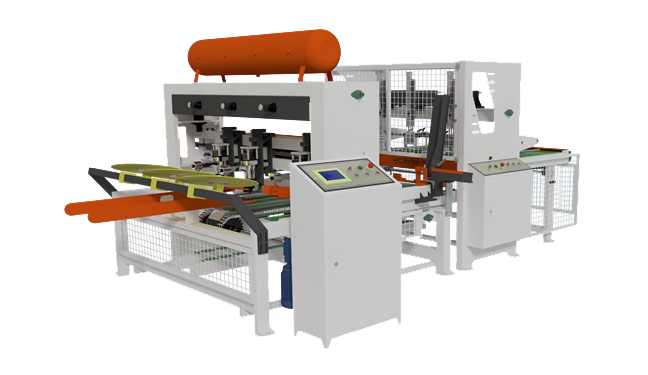
Heavy loading pallets are essential infrastructure in modern logistics and warehousing operations. A block pallet machine represents a significant advancement in how manufacturers produce robust, load-bearing pallets that meet industrial demands. Understanding how to build heavy loading pallets via a block pallet machine requires knowledge of the equipment, materials, and processes involved in creating pallets capable of supporting substantial weight without structural failure.

The block pallet machine automates and optimizes the construction of pallets by precisely nailing wooden blocks to the deck boards. This specialized equipment ensures consistent quality, reduces labor costs, and enables manufacturers to scale production efficiently. The block pallet machine is designed to handle various wood dimensions and assembly configurations, making it versatile for different pallet specifications and customer requirements.
Understanding the Block Pallet Machine Fundamentals
Core Function and Design of the Block Pallet Machine
A block pallet machine performs the critical function of positioning and securing wooden blocks beneath pallet deck boards. The block pallet machine uses pneumatic or hydraulic systems to drive nails through the deck boards into the wooden blocks with precise force and timing. This automation eliminates manual hammering, ensures uniform nail penetration depth, and prevents misalignment that could compromise load-bearing capacity.
The block pallet machine typically features adjustable settings to accommodate different wood species, block sizes, and nail specifications. Operators can configure the block pallet machine to match production requirements, whether building standard four-way pallets or specialized configurations. The precision engineering of a block pallet machine reduces defect rates and ensures every pallet meets structural integrity standards required for heavy loading applications.
Key Components That Enable Heavy Load Capacity
The block pallet machine incorporates several critical components that directly influence the finished pallet's load capacity. The nailing mechanism must deliver consistent striking force to achieve proper fastening without splitting wood or creating weak connection points. A block pallet machine uses industrial-grade air pressure regulation and piston control to maintain this consistency across thousands of units.
Position accuracy is another essential feature of the block pallet machine. Misaligned blocks create stress concentrations that reduce weight capacity. The block pallet machine employs precision guides and stops to ensure every block is positioned exactly where design specifications require it. This accuracy directly translates to pallets capable of supporting heavy industrial loads safely and reliably.
The Production Process for Heavy Loading Pallets
Material Preparation and Setup
Building heavy loading pallets with a block pallet machine begins with proper material preparation. Wooden blocks must be cut to precise dimensions and inspected for defects, cracks, or warping that could affect structural integrity. The deck boards should be selected for density and straightness, as these factors influence how well the block pallet machine can achieve proper nail penetration and hold strength.
Before operation, the block pallet machine requires careful setup and calibration. Operators must adjust the nailing depth based on wood species and nail diameter. This ensures that the block pallet machine drives nails sufficiently into the blocks for secure attachment without over-penetrating and reducing wood strength at the connection point. Proper setup directly determines whether the finished pallet can handle the intended load safely.
Assembly and Nailing Process
The block pallet machine streamlines the assembly process by automating nail positioning and driving. An operator positions a deck board on the block pallet machine's work surface and positions wooden blocks beneath it. The block pallet machine then fires nails in a programmed sequence, attaching each block to the deck board with controlled force and precision that manual methods cannot reliably achieve.
Heavy loading pallets require multiple nails per block connection point to distribute stress and prevent fastener pull-through. The block pallet machine accommodates this requirement by allowing multiple nail passes or multi-nail firing sequences. This automation ensures consistent fastening quality across the entire pallet, which is critical for applications where pallet failure could cause safety hazards or product loss. The block pallet machine's repeatability makes it ideal for producing pallets that must meet strict load capacity specifications.
Quality Verification and Capacity Testing
After the block pallet machine completes assembly, the finished pallet undergoes quality inspection. Visual examination checks for nail alignment, wood splits, and secure block attachment. For heavy loading applications, many manufacturers implement load testing to verify that pallets produced by their block pallet machine actually achieve rated capacity.
The block pallet machine's consistent output reduces variability that would otherwise require increased testing frequency. When a block pallet machine operates correctly with proper setup, the resulting pallets have predictable load-bearing characteristics. This consistency allows manufacturers to build customer confidence and comply with industry standards that specify minimum load capacity requirements.
Advantages for Industrial Heavy Loading Applications
Efficiency and Cost Management
Implementing a block pallet machine dramatically reduces labor requirements compared to manual pallet construction. What once required multiple workers hammering nails by hand can now be accomplished by a single operator managing the block pallet machine. This efficiency translates to lower per-unit production costs, allowing manufacturers to remain competitive while maintaining profit margins.
The block pallet machine also reduces material waste by minimizing wood splitting and fastener deformation. Precise nailing force prevents the damage that can occur when manual hammering misses its target or strikes wood too forcefully. Over thousands of pallets, the material savings from using a block pallet machine contribute significantly to overall profitability and sustainability of the manufacturing operation.
Consistency and Reliability in Heavy Load Scenarios
Heavy loading applications demand absolute consistency because pallet failure can result in injury, property damage, or lost inventory. The block pallet machine delivers this consistency by removing the human variability inherent in manual assembly. Every pallet produced by a properly calibrated block pallet machine has identical nail spacing, penetration depth, and connection strength.
This predictability allows warehouse operators to have confidence that pallets will perform reliably under stated load conditions. The block pallet machine enables manufacturers to document their quality assurance process and provide customers with certification that heavy loading pallets meet or exceed industry standards. Such reliability is particularly valuable in industries like automotive, aerospace, and heavy manufacturing where downtime and failures carry high costs.
Flexibility for Custom Specifications
While automation is often associated with rigid standardization, the block pallet machine can be quickly reconfigured for different pallet designs and heavy loading specifications. Adjustable block spacing, nail type compatibility, and deck board configurations allow a single block pallet machine to produce pallets for diverse customer needs. This flexibility makes the block pallet machine an investment that adapts to market changes without requiring complete equipment replacement.
FAQ
What load capacity can pallets built with a block pallet machine achieve?
Load capacity depends on block wood species, block dimensions, number and size of nails, and deck board quality. A well-designed block pallet machine can produce pallets rated for loads ranging from 1,000 to over 5,000 pounds, depending on configuration. The block pallet machine's consistency ensures that all pallets achieve their rated capacity without significant variation. Manufacturers should conduct load testing to verify that their specific block pallet machine setup meets customer requirements.
How does a block pallet machine improve safety compared to manual pallet construction?
Manual nail driving exposes workers to repetitive strain injuries, misstrikes that can cause hand injuries, and inconsistent fastening that may compromise structural integrity. A block pallet machine eliminates these hazards by automating the nailing process with controlled pneumatic or hydraulic force. Additionally, the consistent fastening quality produced by a block pallet machine means heavy loading pallets have predictable strength, reducing the risk of unexpected failure during use in warehouses or manufacturing facilities.
What maintenance does a block pallet machine require to maintain production quality?
Regular maintenance includes checking pneumatic or hydraulic fluid levels, inspecting nailing mechanism components for wear, cleaning the block pallet machine of wood debris, and verifying calibration settings. Preventive maintenance on the block pallet machine should include periodic replacement of seals, filters, and fasteners. Proper maintenance ensures the block pallet machine continues to produce heavy loading pallets with consistent quality and prevents unexpected downtime that could disrupt production schedules.