
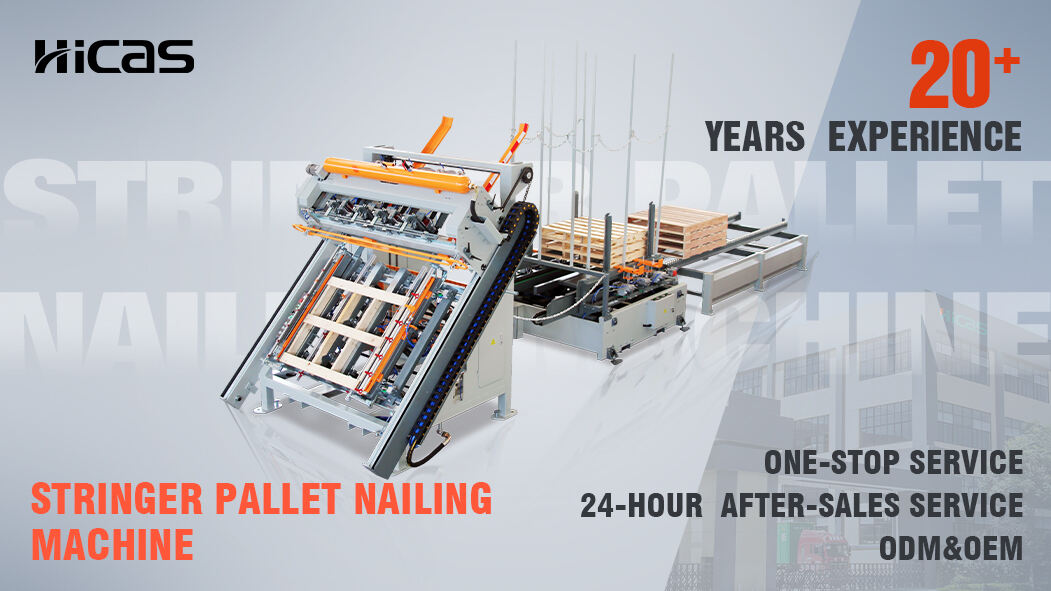
Core Capacity Concepts for Wooden Pallet Making Machines
Design, Effective, and Actual Capacity in Pallet Manufacturing
Capacity planning begins with understanding three critical concepts:
- Design capacity: The theoretical maximum output of machinery under ideal conditions—e.g., 1,200 pallets/day for fully automated systems.
- Effective capacity: Realistic output accounting for scheduled maintenance, shift changes, and material delays; semi-automatic lines typically achieve 400–600 pallets/day.
- Actual capacity: Measured throughput reflecting unplanned downtime—such as pneumatic nailer jams causing ~15% production loss. A 2023 Manufacturing Benchmarking study found actual output averages just 72% of design capacity industry-wide.
Aligning these metrics prevents overestimation of production capabilities and supports realistic scheduling and investment decisions.
Key Metrics: Utilization, Availability, OEE, and Uptime for Wooden Pallet Making Machines
Four operational indicators reveal efficiency gaps:
| Metric | Impact on Pallet Production | Industry Benchmark |
|---|---|---|
| Utilization | Measures machine runtime vs. planned operating time | 85% (optimal) |
| Availability | Tracks uptime excluding maintenance | 92% (top tier) |
| OEE | Overall Equipment Effectiveness (combines availability, performance, quality) | <75% signals bottlenecks |
| Uptime | Critical for automated nailing/stacking systems | 90%+ minimizes backlog |
Chronic uptime below 88% often indicates unoptimized material handling or progressive tooling wear—e.g., misaligned hydraulic presses can reduce OEE by 18% due to rejected pallets. Proactive monitoring of these metrics enables timely, data-driven capacity adjustments.
Machine-Specific Output Benchmarks Across Wooden Pallet Making Machines
Manual, Semi-Automatic, and Fully Automatic Machines: 400–1200 Pallets/Day
The amount of stuff produced really depends on how automated the setup is. When everything's done manually, these stations typically make between 10 to 20 pallets each hour, which adds up to around 80 to 160 per day. But this approach demands lots of hands-on work from employees and often results in products that aren't consistently good quality. Moving up the automation ladder, semi-automatic machines crank out about 30 to 60 pallets an hour, translating to roughly 240 to 480 daily. These systems have power clamps and nailers built in, cutting down on manpower needs by about half compared to pure manual operations. At the top end are fully automatic setups that hit speeds of 90 to 110 pallets per hour, thanks to robotic arms working alongside conveyor belts. With just one person monitoring things, these high-tech lines can run all day long. Some facilities even stretch their operations into 16 hour days when needed, pushing automated systems past the 1,700 pallet mark in a single day's production cycle.
| Machine Type | Hourly Output | Daily Output (8h) | Labor Requirements |
|---|---|---|---|
| Manual | 10–20 | 80–160 | 3–4 workers |
| Semi-Automatic | 30–60 | 240–480 | 2 workers |
| Fully Automatic | 90–110 | 720–880 | 1 operator |
How Setup Time, Maintenance Downtime, and Material Handling Affect Real-World Capacity
In reality, what manufacturers expect from their machines often falls short of what actually gets produced because operations just don't run perfectly all day long. When switching from one pallet design to another, factories typically lose around 15 to 30 percent of their working hours. And then there's the unexpected stuff too - breakdowns that eat away at production capacity somewhere between 5% and 20% every year. Sometimes materials simply aren't available when needed, whether it's lumber stock running dry or screws becoming scarce, which causes efficiency drops of about 7 to 12%. All these issues together bring down Overall Equipment Effectiveness ratings throughout plants to somewhere between 60% and 85%. The good news is companies can fight back against these problems through regular maintenance routines and better inventory management practices like kanban systems. These approaches help bridge the gap between theoretical maximum output and what really happens on factory floors.
Identifying and Resolving Bottlenecks in Wooden Pallet Production Lines
Time-Driven Throughput Mapping and Constraint Analysis
Time driven throughput mapping helps track how long workflows take at different stages of wooden pallet production, showing where the machines get stuck. The technique looks at things like how much time passes between steps, where materials pile up, and when equipment just sits idle. These observations point out exactly where delays happen most often. For instance, during nailing operations or assembly processes, around two thirds of all bottlenecks actually start according to research from Production Efficiency Journal last year. When companies measure these lost minutes and hours across their operations, they can finally see what needs fixing in their production lines.
- Machine-limited stages (e.g., sawing delays from blade wear)
- Labor-dependent constraints (e.g., manual stacking lag)
- Material flow gaps causing workstation starvation
For instance, if assembly requires 8 minutes per pallet while upstream cutting completes units in 3 minutes, accumulating work-in-process signals a critical constraint. Applying the Theory of Constraints (TOC), teams then prioritize solutions like:
- Reallocating operators to overloaded stations
- Adding parallel machines for high-cycle-time processes
- Implementing predictive maintenance to reduce unplanned downtime
This data-driven approach typically increases throughput by 15–22% by converting hidden capacity gaps into actionable improvements.
Strategic Capacity Planning Models for Wooden Pallet Making Machines
Lead, Lag, and Match Strategies for Scalable Pallet Production
When manufacturers want to scale their wooden pallet production, they generally consider three main options for expanding their machine capacity. The first approach is what some call a lead strategy, where companies install extra machines ahead of expected demand spikes. While this helps avoid running out of stock, it can leave expensive equipment sitting idle for long periods, especially since modern high output machines often produce between 400 to 1,200 pallets every day. On the flip side, there's the lag strategy where new capacity comes online only after actual orders come in. This keeps money tied up in fewer assets but creates problems during busy times when delayed shipments strain customer relationships. Most manufacturers find themselves somewhere in the middle with the match strategy. They typically start with semi automatic production lines and gradually move toward full automation as business grows and justifies the investment. According to industry reports, this step by step approach cuts capital risk by about 23 percent compared to buying everything at once. Choosing which path works best really comes down to how unpredictable the market is, how deep the company's pockets run, and whether the biggest bottleneck lies in the machines themselves or in how materials get moved around the facility.
FAQ Section
What is design capacity?
Design capacity is the theoretical maximum output of machinery under ideal conditions. For fully automated systems, this can be around 1,200 pallets per day.
How does effective capacity differ from design capacity?
Effective capacity accounts for realistic output considering scheduled maintenance, shift changes, and material delays, often leading to lower output than design capacity.
Why is actual capacity often lower than effective capacity?
Actual capacity reflects unplanned events such as equipment jams or material shortages, causing losses of around 15% or more in production efficiency.
What strategies can be used for capacity planning in pallet production?
Manufacturers often use lead, lag, and match strategies to scale production, balancing between proactive resource allocation and reactive demand response.