
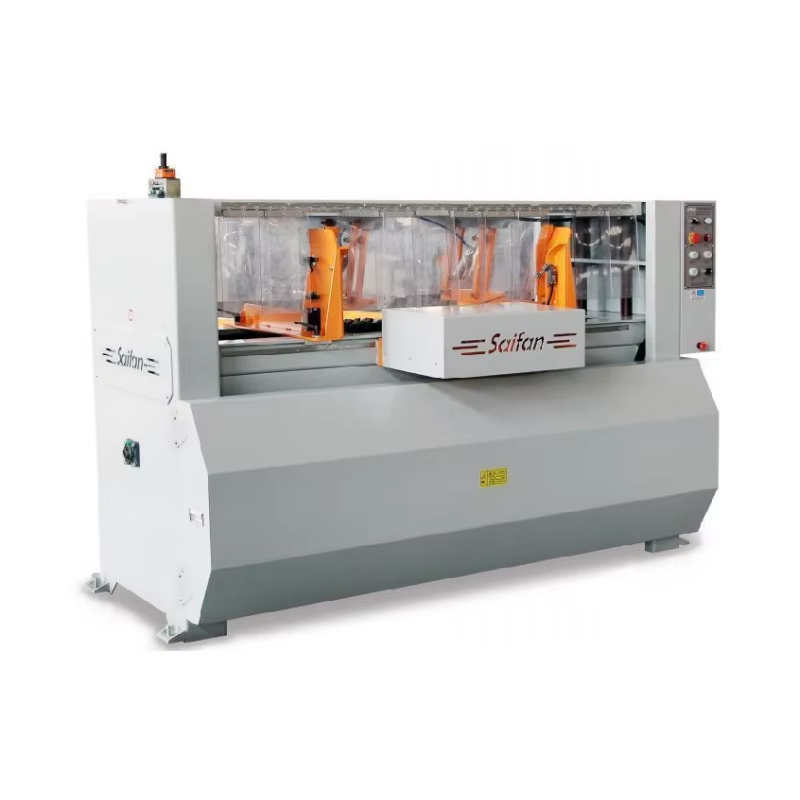
The Strategic Shift: Why Logistics Equipment Manufacturers Are Adopting Automated Pallet Assembly Systems
Rising Demand for Scalable, High-Precision Palletizing in Logistics Equipment Factories
The logistics equipment manufacturing sector is under serious strain these days when it comes to maintaining precision while scaling operations. E-commerce keeps growing fast, and warehouses just don't have room to waste anymore. That's where automated pallet assembly systems come in handy. These systems create standard products with almost no size differences, which is absolutely essential for today's automated storage and retrieval setups. Imagine what happens if a pallet is off by even 5 millimeters? Conveyors get stuck, robots miss their targets, and whole production lines halt down. The cost adds up quickly. Plants that go automated hit about 99.8 percent accuracy on dimensions, compared to around 85 to 90 percent when workers build them manually. And scalability matters too. Top manufacturers can actually double their output during busy periods without needing extra space on the factory floor. They just tweak the assembly settings rather than bringing in temporary staff. What we're seeing here is pretty remarkable transformation. Pallets aren't just sitting there anymore; they've become smart pieces in the bigger picture of how materials move through facilities.
How Labor Shortages and Rising Quality Expectations Accelerate Automation ROI
The combination of ongoing worker shortages and growing intolerance for poor quality has pushed automation from optional to essential for most businesses these days. Finding skilled workers who can handle repetitive assembly work is getting harder all the time. Vacant spots stay unfilled around 45% longer compared to what's normal across industries. Meanwhile, companies face bigger fines when shipments fail quality checks. Pallet problems alone can rack up costs reaching nearly $740,000 per year for leading manufacturers according to Ponemon Institute research from last year. Automated solutions tackle both issues head on. Vision guided robots spot tiny flaws in wooden materials before anything gets assembled, which cuts down quality complaints by almost 90%. Looking at it another way, investing in automation pays off within three years because workers no longer need to do tedious manual tasks. Technicians freed up from hammering nails can now oversee several automated stations at once, boosting their output roughly 150%. This shift transforms the problem of finding enough staff into a real market edge. Plants that regularly pass ISO 6780 inspections tend to land better deals in international shipping networks, whereas other companies struggle with the ups and downs of human error in their production lines.
Measurable Performance Gains: Efficiency, Accuracy, and Throughput in Logistics Production
Automated pallet assembly systems deliver transformative performance improvements across three critical dimensions: cycle time compression, error reduction, and throughput optimization delivering quantifiable returns in modern logistics equipment manufacturing environments.
37% reduction in assembly cycle time lessons from integrated pallet lines
One major player in the industrial equipment space managed to cut down their pallet assembly time by almost 40% just six months after rolling out new systems according to Ponemon's research from last year. They made this happen through three main improvements working together. First off, robots took over the job of fastening joints which used to require workers to check torque levels manually every single time. Second, they installed weighing stations right onto the conveyor belts so nobody had to stop the line for load checks anymore. And third, adjustable height settings let them handle different types of products on the same line without any interruptions. All these changes combined turned what was once batch processing into something much closer to continuous operation. Now customers get their custom logistics gear shipped out the same day instead of waiting nearly two full days like before.
92% drop in manual handling errors: closed-loop vision-PLC control in action
Closed-loop systems pairing industrial vision technology with Programmable Logic Controller (PLC) feedback loops demonstrated a 92% reduction in pallet configuration errors, validated across high-volume case studies. Precision is enforced through real-time validation at critical control points:
| Performance Metric | Improvement | Primary Driver |
|---|---|---|
| Load Stability Errors | 92% reduction | 3D vision scanning of interlock patterns |
| Label Misplacement | 89% reduction | OCR verification before wrapping |
| Weight Distribution Issues | 95% reduction | Continuous load cell monitoring |
Machine learning algorithms dynamically adjust gripper pressure and placement angles based on material characterization data, while torque sensors confirm structural integrity before pallets advance to automated wrapping stations. This integrated approach shifts quality assurance from reactive inspection to predictive prevention.
Seamless Ecosystem Integration: Connecting Automated Pallet Assembly Systems with WMS, AGVs, and Logistics Equipment Lines
AGV palletizer handshake protocols: enabling autonomous material flow in new production lines
AGVs work together with palletizers using standard communication methods, which gets rid of those annoying manual transfers that slow down production lines. When they connect properly, materials keep flowing smoothly all day long. The vehicles bring empty pallets to the right spot and pick up full ones just as soon as something finishes assembling on the line. These systems talk back and forth constantly, so nobody crashes into each other and paths get optimized automatically. Factories running at full speed see around 19% less downtime because of this smart coordination. Putting AGVs next to palletizing stations makes everything run itself basically. Real time tracking tells where each pallet needs to go without anyone having to watch over it. Plants that have switched to this system are seeing their dock to stock times drop by about 30%, which means products reach shelves much quicker than before.
OPC UA enabled dynamic pallet pattern optimization driven by warehouse management systems
Modern warehouse management systems (WMS) can now change how pallets are arranged through OPC UA connections as they monitor what's in stock and what needs shipping right now. With this setup, the automated systems that build pallets can tweak how things get stacked, how high each layer goes, and where weight is placed all without someone having to rewrite code manually. Take automotive parts warehouses for instance. When the WMS spots rush orders coming in, it will switch to making tighter, more compact pallets so trucks can carry more stuff. Companies that have implemented these two-way communication systems report around 98% compliance with load stability standards while cutting down product damage rates by roughly 27%. In auto manufacturing centers, the connection between WMS software and actual machinery on the floor has cut order processing times by about two thirds compared to older methods.
FAQ
Why are logistics equipment manufacturers adopting automated pallet assembly systems?
Logistics equipment manufacturers are adopting automated pallet assembly systems to enhance precision in product dimensions, improve scalability, and integrate smart logistics systems effectively, mitigating space constraints in e-commerce driven environments.
What benefits do automated systems offer in resolving labor shortages?
Automated systems reduce dependency on manual labor, providing a solution to labor shortages by employing vision-guided robots that spot errors, thereby minimizing quality complaints and accelerating return on investment.
How do automated pallet systems improve production processes?
These systems reduce assembly cycle times, minimize manual handling errors, and optimize throughput by using advanced technologies such as robot automation, weighing stations, and height adjustments for continuous and efficient production flow.
How are AGV-palletizer systems contributing to more efficient logistics?
AGV-palletizer systems enhance logistics efficiency by enabling autonomous material flow and reducing manual transfers, which results in significantly reduced downtime and improved real-time tracking within production lines.