
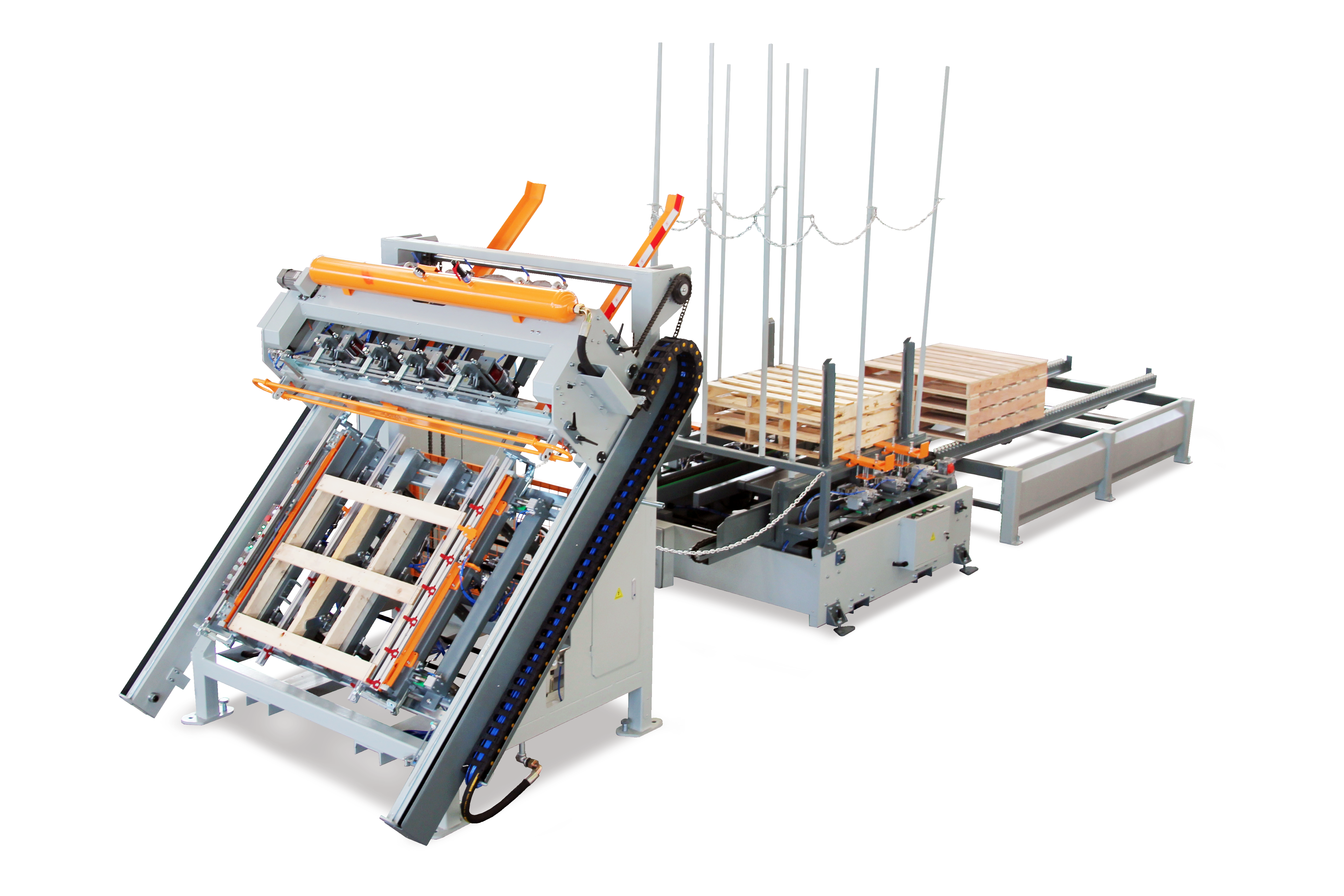
Achieving consistent nail depth is one of the most critical factors in modern pallet manufacturing. Every pallet that leaves your production line must meet exact specifications, and nail penetration depth directly impacts pallet durability, safety, and compliance with industry standards. When nails are driven too shallow, pallets weaken and fail during handling. When nails penetrate too deep, they can damage the wood structure or weaken the fastening integrity. A pallet nailing machine solves this challenge by automating the nailing process with precision controls that ensure every single nail reaches the exact same depth, every single time.
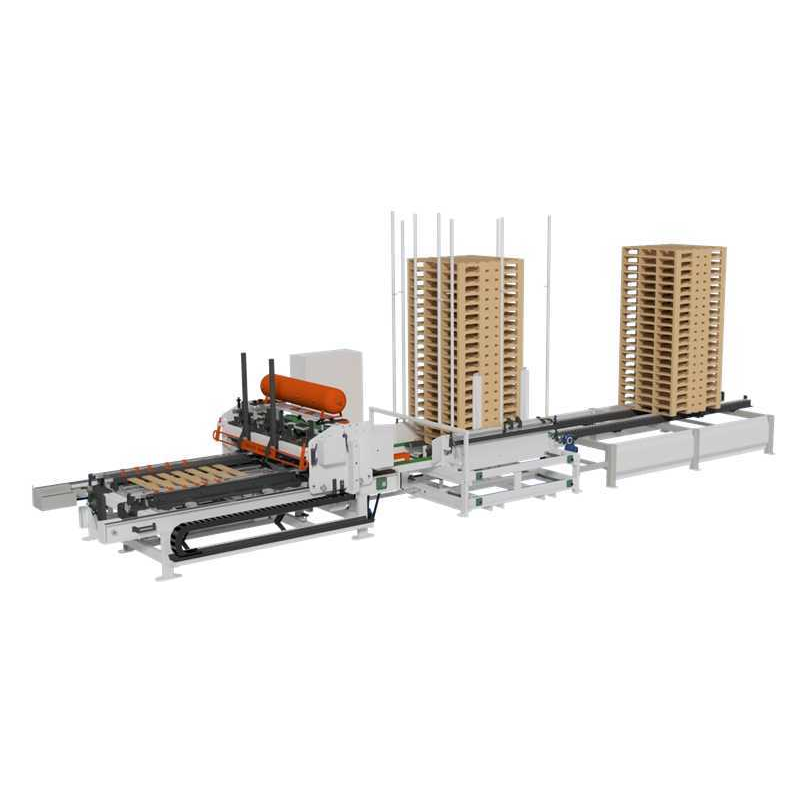
Manual nailing methods cannot deliver the consistency that modern pallet operations demand. Operators working with handheld pneumatic or mechanical nailers face inherent human limitations: fatigue reduces accuracy, varying hand pressure changes penetration depth, and inconsistent striking angles compromise nail placement. A pallet nailing machine eliminates these variables entirely. The machine positions each nail with mechanical or automated precision, applies calibrated force levels, and controls stroke depth through engineering rather than human judgment. This fundamental difference transforms pallet quality from variable to reliable.
Understanding Nail Depth Control in Pallet Manufacturing
Why Nail Depth Matters for Pallet Performance
Nail depth directly determines how effectively a pallet nailing machine can secure pallet components together. When a nail is driven to the correct depth, it creates maximum holding power by engaging both the stringer (the support beam) and the deck board (the top surface) across their full thickness. This joint locks the components together and distributes load forces evenly across the fastened area. If a pallet nailing machine drives nails too shallow, the penetration stops before reaching full engagement, leaving weak points that can separate under load. Conversely, if the nail goes too deep, it can split the wood fiber, reduce clamping pressure, or even push through to the opposite side, creating splinter hazards and quality failures.
Industry Standards and Specification Requirements
Pallet manufacturers operating under GMA (Grocery Manufacturers Association) guidelines, NWPCA (National Wooden Pallet & Container Association) standards, or IPPC (International Plant Protection Convention) regulations must maintain documented nail depth specifications. Most standards require nail depths between 1.5 and 2.5 inches depending on wood type, nail size, and stringer thickness. A pallet nailing machine equipped with depth adjustment controls allows operators to set these specifications once and maintain them across entire production runs. This compliance capability protects manufacturers from costly rework, liability exposure, and customer rejection. Third-party auditors and logistics partners increasingly verify that pallet nailing machine settings match documented specifications, making consistent control both a quality requirement and a business requirement.
How a Pallet Nailing Machine Achieves Consistent Depth
Mechanical Depth Limiting Mechanisms
Modern pallet nailing machines use adjustable depth stops or mechanical limiters that physically prevent the nail driving head from traveling beyond a preset distance. Once the operator or production manager sets the depth stop on the pallet nailing machine, the mechanical stop engages when the driving head reaches that exact point, preventing further downward movement. This hardware-based control means depth consistency does not depend on operator skill or machine software calibration. The pallet nailing machine simply cannot drive a nail deeper than the stop allows, making it physically impossible to create depth variation within a production run. Some advanced machines feature multiple depth stop positions or quick-change systems that allow operators to switch between depth settings for different pallet configurations without requiring tool adjustments.
Pneumatic and Electronic Pressure Control
Beyond mechanical stops, a pallet nailing machine typically includes pneumatic pressure regulators or electronic force controls that govern how hard the driving head strikes the nail. Consistent pressure means consistent penetration. When air pressure flowing into a pallet nailing machine's pneumatic cylinder is set at a specific PSI (pounds per square inch) and held constant by a regulator, every nail strike delivers the same force. This eliminates the variable energy that comes from manual striking. Electronic control systems take this further by monitoring actual force levels in real time and adjusting solenoid valve timing to compensate for variations in air supply, wood hardness, or nail positioning. A pallet nailing machine with electronic feedback can even detect when nail resistance suddenly increases (indicating a knot or dense grain) and adjust the driving force to maintain target depth rather than bouncing back or driving too deep.
Practical Benefits of a Pallet Nailing Machine for Production Operations
Quality Consistency and Reduced Rework
When every nail from a pallet nailing machine penetrates to the same depth, pallet quality becomes predictable and verifiable. This consistency eliminates the need for manual depth inspections at final quality check stations. Operators can visually confirm that nails are present and aligned, but they no longer need to measure penetration depth on every pallet because the pallet nailing machine's mechanical control already guarantees it. This reduces labor at the final inspection stage and, more importantly, eliminates pallets that fail inspection due to inconsistent nailing. Facilities that have upgraded from manual nailing to a pallet nailing machine typically report a 15–25 percent reduction in rework costs because fewer pallets require re-nailing or rejection.
Production Speed and Labor Efficiency
A pallet nailing machine operates at a fixed cycle time, typically driving nails at rates between 200 and 1000 nails per minute depending on machine configuration and pallet design. This speed surpasses manual operator performance and remains constant regardless of operator fatigue. An operator using a handheld nailer must manage positioning, aim, and strike force for each nail, which inherently slows pace during a shift as fatigue builds. A pallet nailing machine maintains peak performance for every nail in every pallet throughout an entire production day. Over a typical manufacturing facility operating two or three shifts, the consistent throughput of a pallet nailing machine translates directly into increased pallet output without proportional increases in labor costs. Many manufacturers find they can increase daily production by 30–50 percent by switching from manual nailing to an automated pallet nailing machine.
Worker Safety and Ergonomic Advantages
Operators using handheld pneumatic nailers face repetitive strain injuries, hand fatigue, and the constant risk of accidental discharge or nail deflection that could cause injury. A pallet nailing machine transfers these physical demands to the equipment. The operator loads the pallet, positions components, triggers the machine cycle, and the pallet nailing machine handles the nail driving. This shift dramatically reduces ergonomic injury risk and allows experienced workers to remain productive longer in their careers. Facilities using a pallet nailing machine also report fewer workers' compensation claims related to nailing operations and improved employee satisfaction because the work becomes less physically demanding.
FAQ
What depth settings should I use on a pallet nailing machine for standard pallet construction?
For most standard 48-by-40-inch pallets with nominal 5.5-inch stringers and 5-inch deck boards, nail depth should be set between 1.75 and 2.25 inches on your pallet nailing machine. This range ensures the nail penetrates through the deck board and at least 0.75 inches into the stringer for adequate holding power. Always verify the specific depth requirement with your pallet specification sheet or customer order, as some clients require deeper or shallower settings based on their specific load requirements or wood type.
How often does a pallet nailing machine require depth adjustment or calibration?
A quality pallet nailing machine maintains depth accuracy for extended periods once properly set. Most machines require depth verification only at the start of each production shift or when switching between different pallet designs. Some facilities perform depth checks every 500–1000 pallets as part of quality assurance protocol. If wood moisture content, wood type, or nail specifications change, your pallet nailing machine depth settings may require adjustment to maintain the target penetration depth.
Can a pallet nailing machine handle variations in wood thickness or quality?
A standard pallet nailing machine maintains consistent nail depth regardless of minor wood thickness variations, but significant differences require depth setting changes. If you regularly work with wood that varies more than 0.25 inches in thickness, your pallet nailing machine may benefit from electronic feedback controls that detect wood density and automatically adjust driving force. Some advanced machines can handle multiple wood types within the same production run by using preset depth profiles for different pallet configurations.