
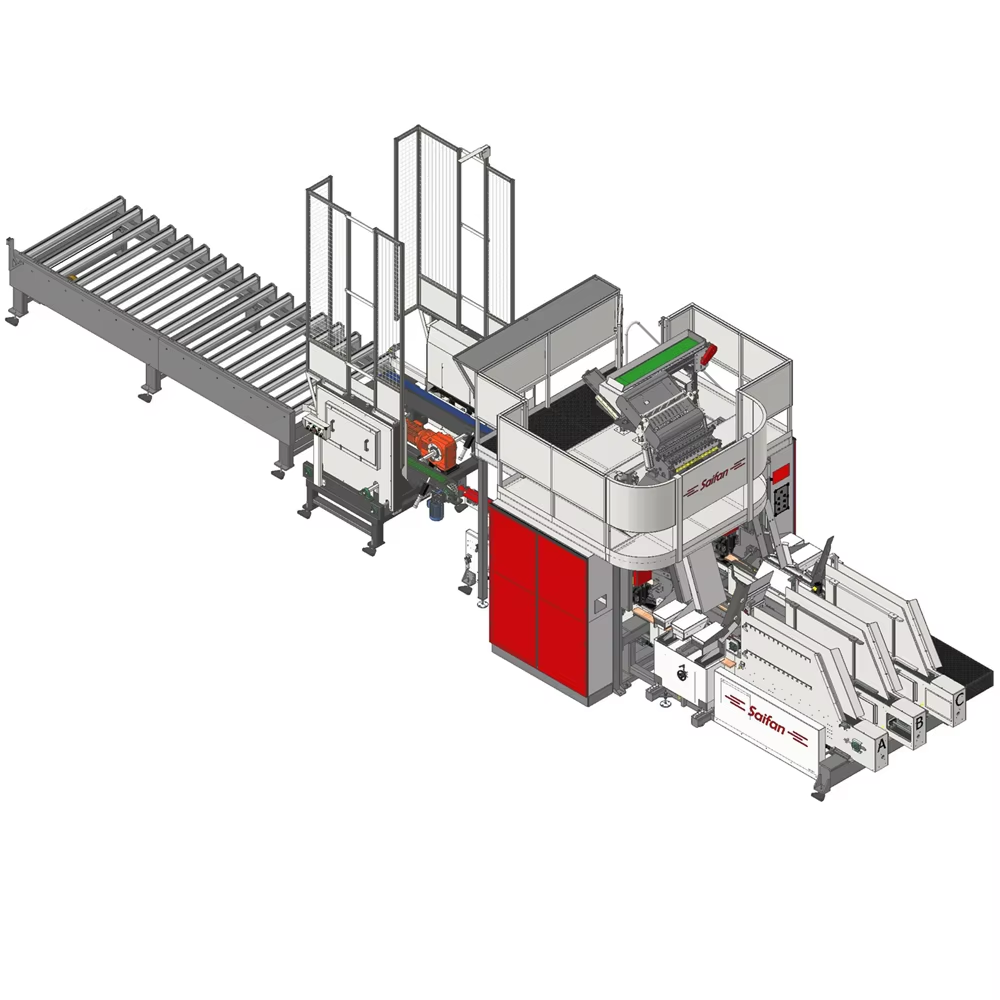
Robotic Palletizing and Assembly for Modern Wood Packaging Equipment
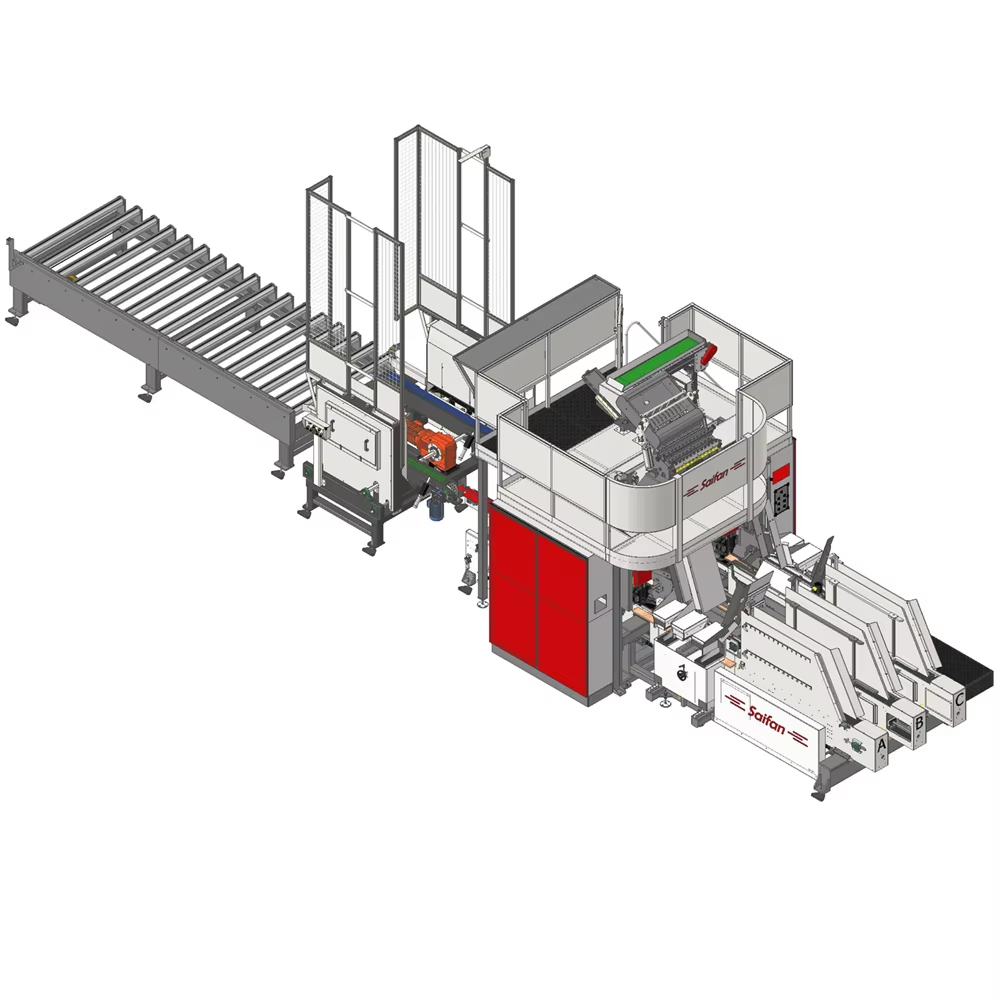
Vision-Guided Robotic Systems for Precision Wooden Pallet Loading
Wood packaging equipment now benefits from vision guided robotics that position materials with incredible precision down to the millimeter level. These systems revolutionize how pallets get loaded using real time 3D imaging technology. The advanced cameras not only measure board dimensions but also spot all sorts of surface issues like checks, warps, and other structural problems. This allows for smarter stacking arrangements that keep loads stable during transport. Special force torque sensors help adjust for those inevitable inconsistencies found even in kiln dried lumber. Plus, the machines learn over time through built in algorithms that constantly tweak their placement strategies based on what works best. Industry reports show these automated systems hit around 99.3 percent accuracy when placing materials, cutting down product damage rates by nearly a quarter compared to workers doing it manually. What makes them so valuable is their ability to work with almost any type of wood out there, whether it's soft pine or tough hardwood, without needing expensive tool changes. For companies running large scale operations producing crates and pallets day after day, this kind of flexibility saves both time and money.
Collaborative Robots (Cobots) with Adaptive Gripping for High-Mix Wood Packaging Equipment
Collaborative robots (cobots) equipped with adaptive end-effectors bring unprecedented flexibility to wood packaging operations. Their key capabilities include:
- Interchangeable grippers that auto-switch between vacuum, mechanical, and magnetic systems based on load type and material density
- Force-limited joints enabling safe, intuitive human collaboration during changeovers and troubleshooting
- AI-driven pattern recognition for dynamic, mixed-SKU pallet configurations
Unlike traditional industrial robots, cobots integrate seamlessly with existing sawmill conveyors and require minimal programming expertise. They reduce physical strain injuries by 43% and maintain 98% uptime in high-variability environments. For operations handling under 20 cases per minute, cobots deliver ROI within 14 months by eliminating repetitive motion tasks and lowering staffing requirements.
AI-Driven Optimization and Predictive Intelligence in Wood Packaging Equipment
Real-Time AI Algorithms for Cycle Time Reduction and Defect Detection in Kiln-Dried Lumber Handling
AI systems running in real time are really boosting production speed while making quality checks much better on wood packaging lines. The computer vision tech looks at kiln dried lumber and catches most defects - around 99% accurate according to tests - spotting things like cracks or warping that human graders might miss. This kind of automatic checking takes away those annoying slowdowns at the grading area and cuts down wasted material by somewhere between 15 and 20 percent because it knows exactly where to cut out problem spots. At the same time, smart algorithms crunch numbers from all sorts of equipment including conveyor belts, drying chambers, and nail guns to keep materials moving smoothly through the factory floor. These improvements mean factories can produce more pallets each day without sacrificing the straightness and sturdiness needed for heavy duty shipping applications in warehouses and distribution centers.
Predictive Maintenance Dashboards for Nailers, Strappers, and Conveyor Systems
Wood packaging equipment management is changing thanks to predictive maintenance dashboards that move operations away from fixing problems after they happen toward preventing them before they occur. These smart systems gather all sorts of data including vibrations, temperature readings, and power usage from various machines like nailers, strapping units, and conveyor belts. What makes them special is their ability to predict when components might fail anywhere between seven to fourteen days ahead of time. Real world results speak volumes too - factories report cutting down unexpected stoppages by around forty percent, saving twenty five percent on repair costs, and getting seventeen extra percent life out of their conveyor systems. The dashboard sends alerts based on how likely different failures are to happen, so maintenance teams know what needs attention first. When parts start showing signs of wear, technicians get detailed instructions right there on screen telling them exactly which components need replacing during regular maintenance breaks, keeping those fully automated packaging lines running without interruption.
IoT Integration and Smart Factory Readiness Across Wood Packaging Equipment Lines
OT-IT Convergence Strategies for Legacy Sawmill-to-Packaging Equipment Integration
When operational tech meets information tech in sawmills, it connects old school infrastructure with today's wood packaging solutions. Putting those little IoT sensors throughout kiln dryers, conveyor belts, and nailing stations gives managers actual eyes on what's happening with materials moving through the plant and how healthy all those machines really are. There are basically three main gains from this setup. First off, predictive maintenance warnings for things like strapping machines and saw blades cut down unexpected breakdowns around 30%. Second, tracking inventory automatically from when logs arrive until finished pallets leave makes everyone's job easier. And third, optimizing how much energy gets used during drying saves money too. The PLC data coming out of older equipment now goes into central monitoring screens, so operators can tweak packaging line speeds depending on what's coming down the pipe from earlier stages in production. This eliminates those annoying bottlenecks between different parts of the process and makes handling special order pallet specs much smoother. Some mills have seen their changeover times drop about 22%, which proves that bringing together these separate systems creates something bigger than just individual machines working alone.
Measurable Business Impact of Automation on Wood Packaging Equipment Operations
Wood packaging operations see real money savings when automation comes into play. The numbers speak for themselves: production speeds jump anywhere from 20 to 50 percent compared to what humans can manage manually. When it comes to cutting and putting things together, machines get it right most of the time, so we waste about 20 percent less material overall. Palletizing and strapping equipment just keeps going day after day without needing coffee breaks or sleep, which cuts down on payroll expenses quite a bit. Staff members aren't stuck doing repetitive work anymore; they can actually focus on making sure products meet quality standards and figuring out ways to make processes better. Safety stats also look good too. Accident reports tend to fall around 30 percent once companies start using collaborative robots for dangerous jobs like lifting heavy loads or driving nails through thick boards. All told, businesses that implement these changes typically save between 40 and 50 percent on operating costs at their bigger facilities. That kind of saving power makes them stand out against competitors who still rely heavily on traditional methods in today's tough packaging industry landscape.
Frequently Asked Questions (FAQ)
What is the accuracy rate of vision-guided robotics in wood packaging?
The accuracy rate is around 99.3% when placing materials, significantly reducing product damage rates.
How do collaborative robots (cobots) benefit wood packaging operations?
Cobots reduce physical strain injuries by 43% and maintain 98% uptime, while providing a quick ROI and lowering staffing requirements.
How does AI contribute to quality checks in kiln-dried lumber handling?
AI-driven systems improve defect detection with around 99% accuracy, enhancing production and reducing waste.
What is the impact of predictive maintenance dashboards on wood packaging equipment?
Predictive maintenance reduces unexpected stoppages by about 40% and saves 25% on repair costs.
How does IoT integration improve wood packaging operations?
IoT sensors optimize equipment performance, manage inventory, and improve energy efficiency, reducing breakdowns by 30%.
Table of Contents
- Robotic Palletizing and Assembly for Modern Wood Packaging Equipment
- AI-Driven Optimization and Predictive Intelligence in Wood Packaging Equipment
- IoT Integration and Smart Factory Readiness Across Wood Packaging Equipment Lines
- Measurable Business Impact of Automation on Wood Packaging Equipment Operations
-
Frequently Asked Questions (FAQ)
- What is the accuracy rate of vision-guided robotics in wood packaging?
- How do collaborative robots (cobots) benefit wood packaging operations?
- How does AI contribute to quality checks in kiln-dried lumber handling?
- What is the impact of predictive maintenance dashboards on wood packaging equipment?
- How does IoT integration improve wood packaging operations?