
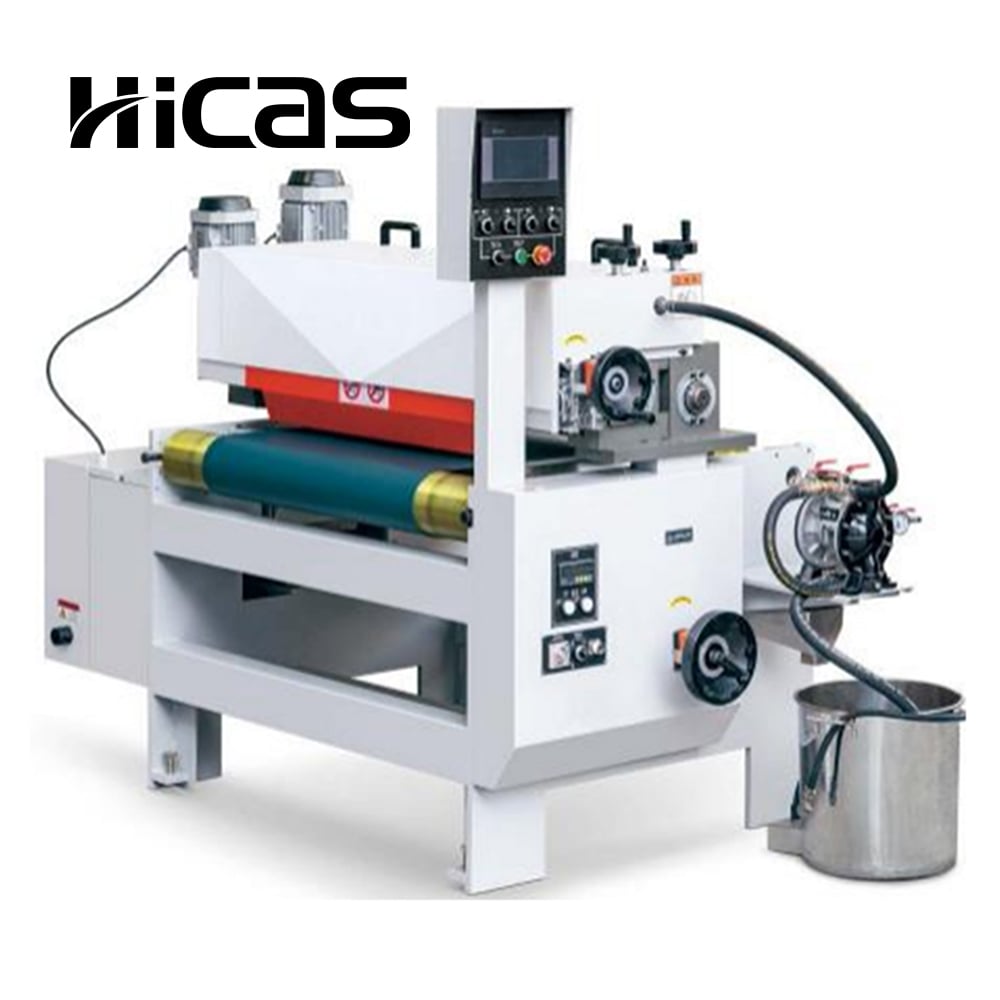
Achieving a clean, uniform finish on wood products is one of the most demanding challenges in furniture and door manufacturing. Whether you are running a high-volume production line or managing a specialized workshop, the quality of your surface finishing directly determines the final product value. Modern wood coating machines have transformed how manufacturers approach this challenge, delivering consistent, professional results with far greater efficiency than traditional manual methods. Understanding what these machines offer and how they work is essential for any operation aiming to raise its finishing standards.
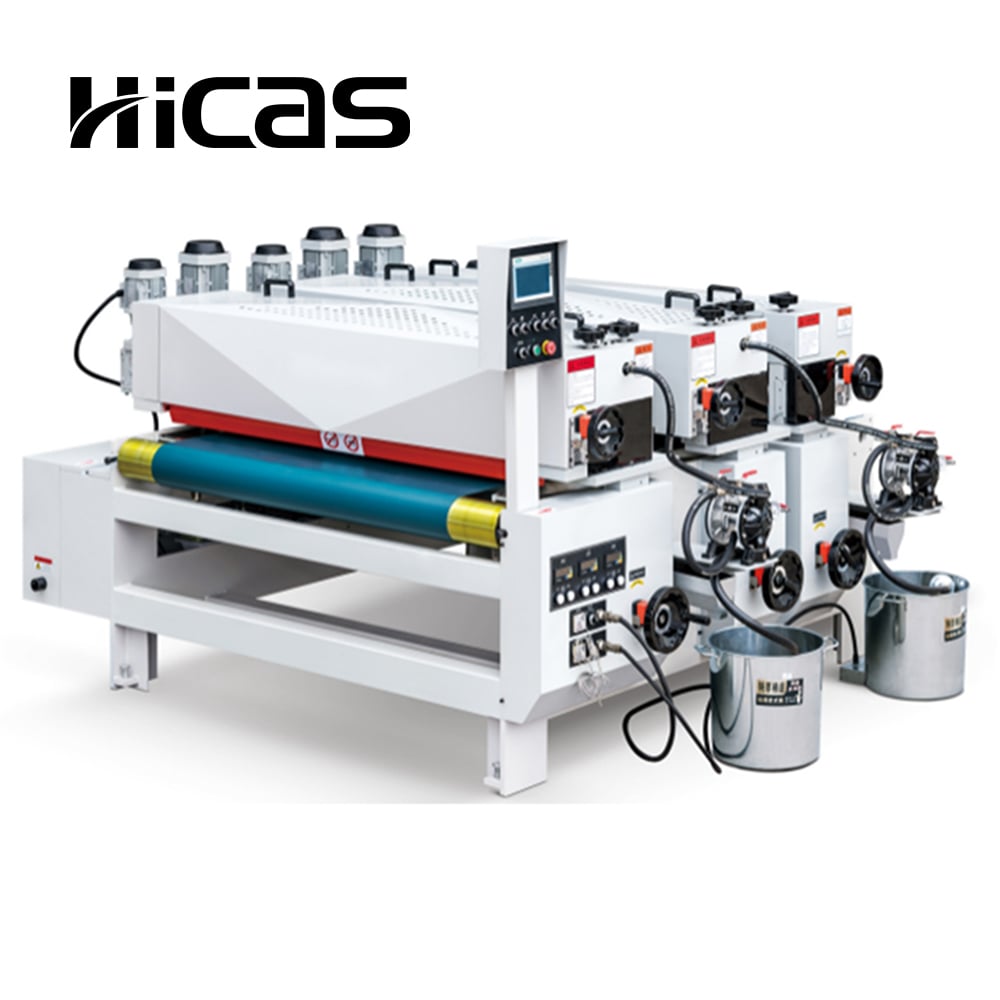
Wood coating machines are now at the core of modern wood processing facilities. They handle the application of paints, primers, lacquers, and sealants with precision that human operators cannot replicate at scale. As product quality expectations rise across global markets, investing in capable wood coating machines is no longer optional for competitive manufacturers — it is a strategic necessity. This article explores how these machines enable cleaner finishing, better polish results, and more reliable production outcomes.
How Wood Coating Machines Deliver Superior Finishing
Precision Spray Control and Even Coverage
One of the primary reasons wood coating machines outperform manual application is their ability to maintain consistent spray pressure, angle, and distance across every piece. Manual spraying introduces variability — operators tire, angles shift, and coverage becomes uneven over long shifts. Wood coating machines eliminate this variability by automating the spray path and controlling coating volume with mechanical precision. The result is a smooth, even surface layer that requires minimal sanding or rework after application.
Modern wood coating machines use programmable spray heads that can be adjusted for different wood types, surface profiles, and coating viscosities. This adaptability means the same machine can handle flat panels for cabinet doors one hour and profiled moldings the next, without sacrificing coating quality. The ability to fine-tune wood coating machines for each product type is a major operational advantage in mixed-production environments.
Reduced Coating Waste and Material Efficiency
Beyond surface quality, wood coating machines significantly reduce material waste. Automated systems apply coating material in precisely measured quantities, minimizing overspray and drips that are common in manual operations. For facilities working with premium lacquers or UV-curable coatings, this efficiency directly lowers material costs. Wood coating machines with closed-loop circulation systems recover unused coating and return it to the supply tank, making every production run more economical. Over the course of a full production year, the material savings from high-quality wood coating machines can be substantial.
The Role of Automation in Modern Polish and Finishing Lines
Automated Workflow Integration
Wood coating machines do not operate in isolation — they are part of a broader automated finishing line. In advanced furniture factories, wood coating machines work alongside conveyors, drying ovens, and sanding stations to create a continuous, integrated workflow. Products enter the line raw and exit fully coated and ready for assembly. This end-to-end automation reduces handling time, minimizes the risk of surface damage between processes, and allows production supervisors to maintain consistent quality across large batch runs.
The integration of wood coating machines into automated lines also makes quality control simpler. Sensors and vision systems can be positioned to inspect coated surfaces immediately after application, flagging defects before they progress further down the line. When wood coating machines are properly calibrated and integrated, the number of rejected pieces drops significantly, improving overall production yield.
Consistency Across High-Volume Production
One of the most critical advantages of wood coating machines in high-volume settings is their ability to reproduce identical results across thousands of pieces. Manual finishing may be acceptable for artisan or custom production, but it cannot meet the consistency demands of large-scale manufacturing. Wood coating machines maintain the same spray parameters, dwell times, and coating thickness for every unit that passes through the system. This uniformity is especially important when producing furniture collections or door sets where all pieces must match in color depth and surface sheen. Buyers and end-customers notice inconsistency, and wood coating machines are the most reliable tool for preventing it.
Selecting Wood Coating Machines for Your Production Needs
Matching Machine Capability to Product Type
Not all wood coating machines are designed for the same applications. Flat-line coating machines are ideal for sheet materials, cabinet doors, and flat furniture panels. Profiling wood coating machines are built for shaped or contoured surfaces, using rotating spray heads or reciprocating nozzle systems to coat complex geometries. For manufacturers producing wooden doors, dedicated wood coating machines with vertical or horizontal spray configurations offer the most consistent results on large, flat surfaces. Selecting wood coating machines that match the actual product profile and coating requirements of your operation is the first step toward achieving reliable finish quality.
Key Performance Factors to Evaluate
When evaluating wood coating machines, production speed is an obvious consideration, but it should be balanced against coating quality. A machine that runs fast but leaves uneven coverage will cost more in rework than a slightly slower system with precise atomization. Other important factors include nozzle configuration, atomization technology, conveyor width, compatibility with water-based and solvent-based coatings, and the availability of service support. Wood coating machines require regular maintenance to sustain performance, so ease of cleaning, nozzle replacement, and access to spare parts should factor into any purchasing decision. Investing in wood coating machines with strong technical support and documented maintenance schedules protects long-term production reliability.
FAQ
What types of coatings can wood coating machines apply?
Wood coating machines can apply a wide range of surface treatments, including water-based paints, solvent-based lacquers, UV-curable coatings, primers, and sealants. The specific coatings compatible with a given machine depend on its spray system design and material handling components. Most industrial wood coating machines are configurable for multiple coating types, making them versatile across different product lines and finishing specifications.
How do wood coating machines improve finish consistency compared to manual spraying?
Wood coating machines maintain fixed spray parameters — including pressure, distance, speed, and angle — throughout the entire production run. Manual spraying introduces human variability that leads to uneven coverage, drips, and inconsistent color depth. Wood coating machines remove this variability by automating every aspect of coating application, which is especially important for large batches where uniformity across all pieces is required.
Are wood coating machines suitable for small or mid-sized furniture workshops?
Yes, wood coating machines are available in configurations suited to different production scales. Compact and semi-automated wood coating machines are designed for smaller workshops that want to improve finish quality without the footprint or cost of a full industrial line. These entry-level wood coating machines still deliver significantly better consistency and material efficiency than manual methods, making them a practical investment for growing operations looking to upgrade their finishing capabilities.