Align Machine Capabilities with Pallet Design and Production Scale
Block vs. Stringer Pallet Compatibility for Pallet Nailing Machine Integration
Block pallets have those perpendicular blocks sandwiched between decks, but stringer pallets work differently since they use parallel boards instead. This means totally separate approaches when it comes to nailing things down properly. For block designs, nails need to go across directions so the deck boards stay attached to both top and bottom parts. Stringer pallets require careful parallel fastening along the main support structures though. Most modern nailing equipment handles these differences pretty well now thanks to features like programmable nail sequences and adjustable jigs that let operators switch configurations without having to completely retool their machines. And don't forget about standard sizes either. The 48 inch by 40 inch dimension is king in this industry. According to numbers from the National Wooden Pallet & Container Association, sticking with these standard measurements cuts down on jams by around 41 percent and boosts production rates by nearly 28 percent over non-standard sizes. Makes sense why manufacturers stick with them so much.
Optimize Automation Level for Labor Efficiency, Safety, and ROI
Reducing Operator Dependency: Tandem vs. Beam Nailing Configurations
Tandem nailing systems handle fastening across several axes at once, cutting down on manual work by around 40% compared to traditional beam setups based on recent NWPCA data from 2023. A single worker can run two nailing stations together without needing to constantly rotate and move pallets back and forth. Traditional beam systems need step by step operations which takes longer and puts more physical stress on workers. When production volumes are high, these tandem arrangements save about $27 on labor for each pallet processed and cut nail related injuries in half because operators stay further away from moving parts when nails are being driven. Getting these systems up and running well depends heavily on how easy they are to maintain and whether their synchronization works properly regardless of whether they're powered pneumatically or through servos, especially when dealing with different shaped pallets throughout the day.
Ensure Seamless Integration with Modern Control and Multi-Function Capabilities
Modern pallet production demands unified, interoperable systems— not isolated machines. Integrated control architecture eliminates data silos and enables real-time coordination across nailing, cutting, trimming, and stacking functions, turning discrete operations into a responsive production loop.
Modular Systems: Combining Pallet Nailing Machine, Corner Cutting, Branding, and End Trimming
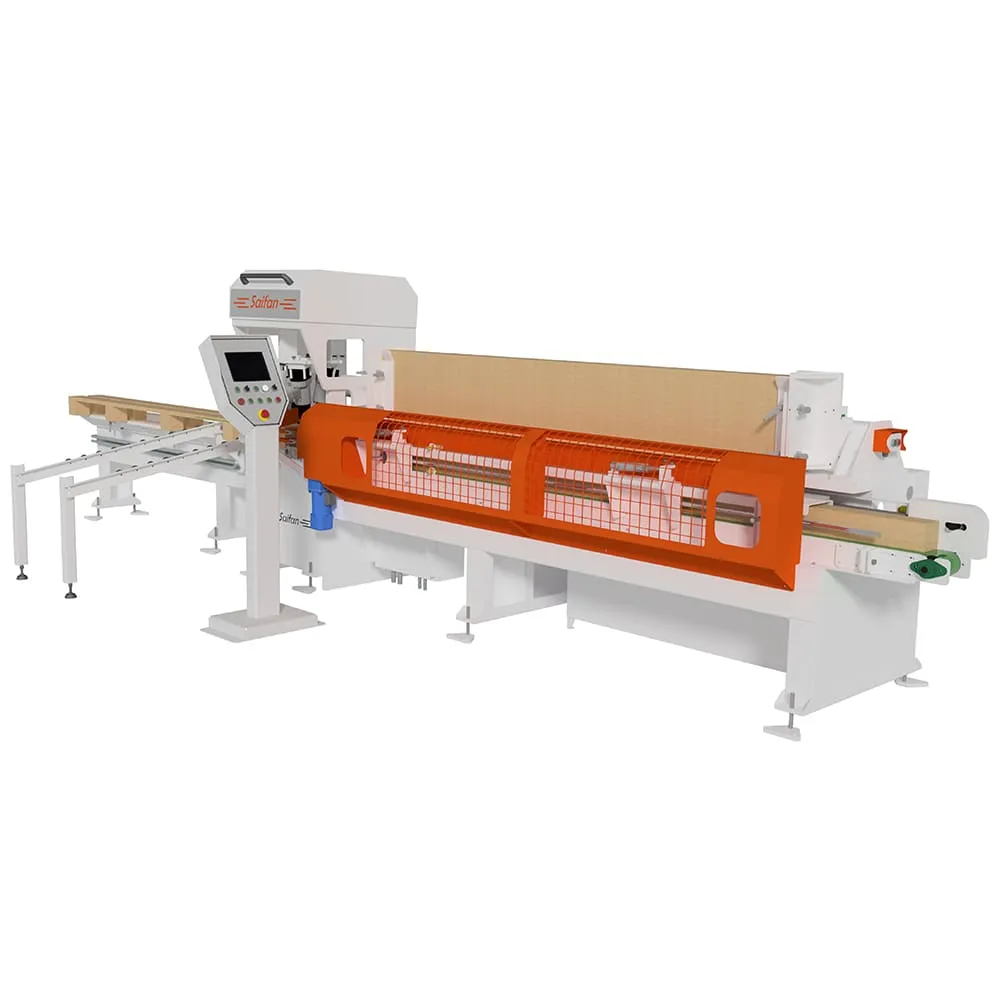
The heart of modular pallet production is usually a central nailing machine, but these systems can be expanded with extra components such as corner cutters, branding stations, and end trimmers all managed from one control panel. Getting rid of those tedious manual moves between stations really cuts down on time spent making pallets about 30 percent faster without compromising how straight they are or their overall appearance. With software that defines configurations, operators can switch back and forth between regular and special order pallet designs almost instantly. There's no need to physically rearrange anything when orders change, which means factories respond much quicker to whatever customers throw at them next.
PLC-Controlled Precision: Touchscreen Interfaces and Servo-Driven Stacking Accuracy
Modern PLC systems now come equipped with touchscreens that bring together all aspects of production control onto a single interface. Operators can adjust nailing patterns, set cutting depths, manage brand placement accuracy, and even monitor stacking tolerances down to half a millimeter from one central location. These machines use servo motors for their actuation components, which means they stack materials in exactly the same way every time. When products are properly aligned during stacking, it prevents those frustrating situations where entire batches get rejected later on in the supply chain or cause equipment damage. The improved accuracy translates to about 18 percent less wasted lumber compared to traditional manual operations. Plus, these systems regularly pass the tough requirements outlined in ISO 8611-1 for both strength and size specifications, something many competitors still struggle with.
FAQ Section
What are block and stringer pallets?
Block pallets have perpendicular blocks between deck boards for support, whereas stringer pallets use parallel boards for structural support.
How do advanced pallet nailing machines handle different pallet designs?
Modern nailing machines have programmable nail sequences and adjustable jigs that allow handling of different configurations without extensive retooling.
What is the significance of standard pallet size?
Standard pallet sizes, like 48x40 inches, help reduce jams and increase production efficiency.
Why is equipment adaptability important for non-standard pallets?
Non-standard pallets require automation systems that can handle variability in size and design, ensuring operational flexibility and efficiency.
How does tandem nailing reduce dependency on operators?
Tandem nailing can fasten across multiple axes, reducing manual labor by 40% compared to traditional methods.