
Selecting the right wood coating machines is one of the most consequential decisions a furniture manufacturer or wood processing facility can make. The choice between spray-based and roll-based wood coating machines directly influences finish quality, material consumption, production speed, and operational costs. Getting this decision right means understanding not just how each technology works, but how each one aligns with your specific production environment, substrate types, and quality expectations.
Both spray and roll wood coating machines have earned their place in modern wood finishing workflows. Neither approach is universally superior. Instead, each type of wood coating machines performs best under particular conditions, and the best choice depends on factors such as part geometry, coating viscosity, required film thickness, throughput targets, and budget constraints. This article explores the core selection logic so you can confidently evaluate which category of wood coating machines suits your operation.
How Spray Wood Coating Machines Work
The Spray Mechanism and Its Strengths
Spray wood coating machines atomize liquid coating material and project it onto the wood surface through nozzles or spray guns. Automated spray systems used in industrial wood finishing lines can deploy reciprocating arms, rotating discs, or robotic spray heads to achieve consistent, repeatable coverage. Wood coating machines of the spray type excel at handling complex geometries, including curved profiles, door frames, mouldings, routed edges, and three-dimensional furniture parts where a flat roller simply cannot reach every contour.
The key advantage of spray wood coating machines lies in their flexibility. They can apply a wide range of coatings, from thin lacquers to UV-cured finishes, across highly varied substrates. When dealing with doors, cabinet fronts with detailed profiles, or furniture pieces with uneven surfaces, spray wood coating machines deliver coverage that roll-based systems cannot match. Additionally, modern automated spray wood coating machines offer precise control over spray angle, fluid pressure, and fan pattern, which supports consistent film build and minimizes rework.
Limitations of Spray Technology
Spray wood coating machines typically generate overspray, meaning a percentage of coating material does not land on the target surface. This increases material waste and demands proper ventilation, filtration, and potentially explosion-proof enclosures depending on the solvent content of the coating. Maintenance requirements for spray wood coating machines include regular cleaning of nozzles, fluid lines, and pumps to prevent clogging and ensure consistent atomization quality. These operational demands should factor into your total cost of ownership calculation when evaluating wood coating machines.
How Roll Wood Coating Machines Work
The Roll Mechanism and Its Strengths
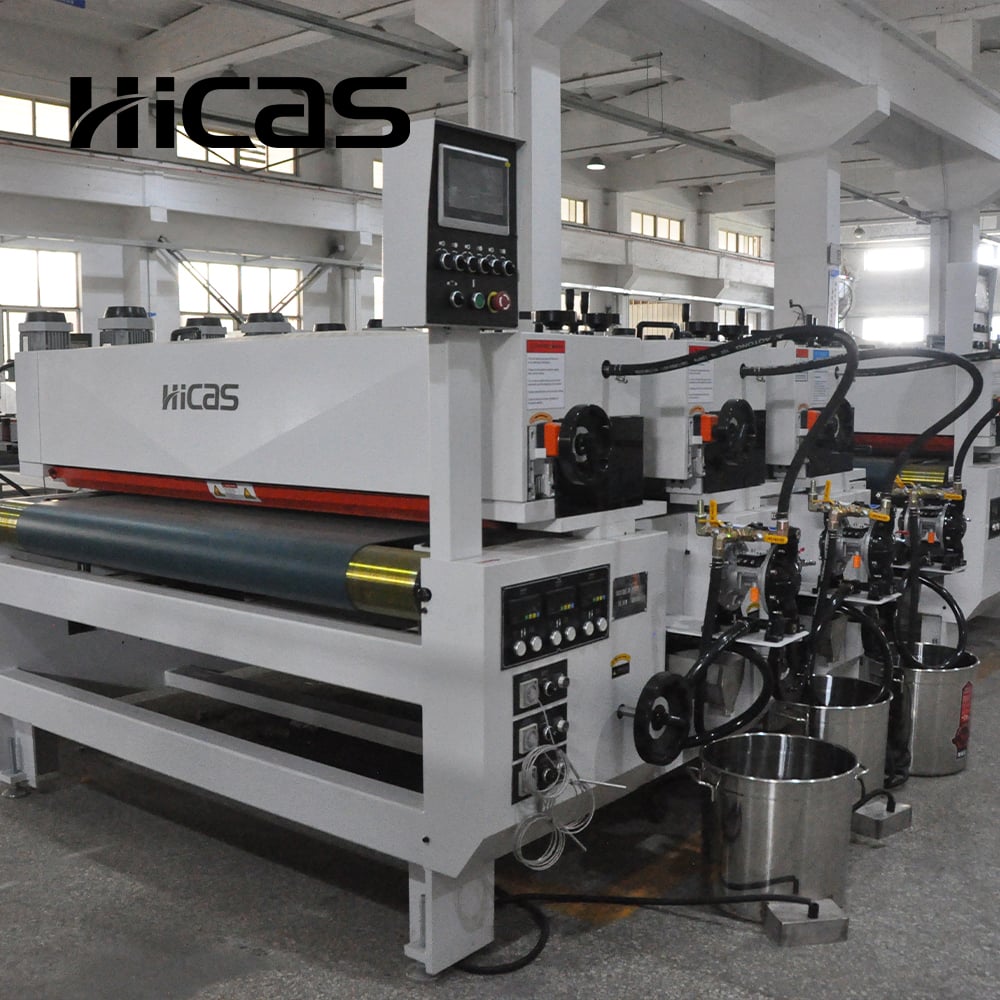
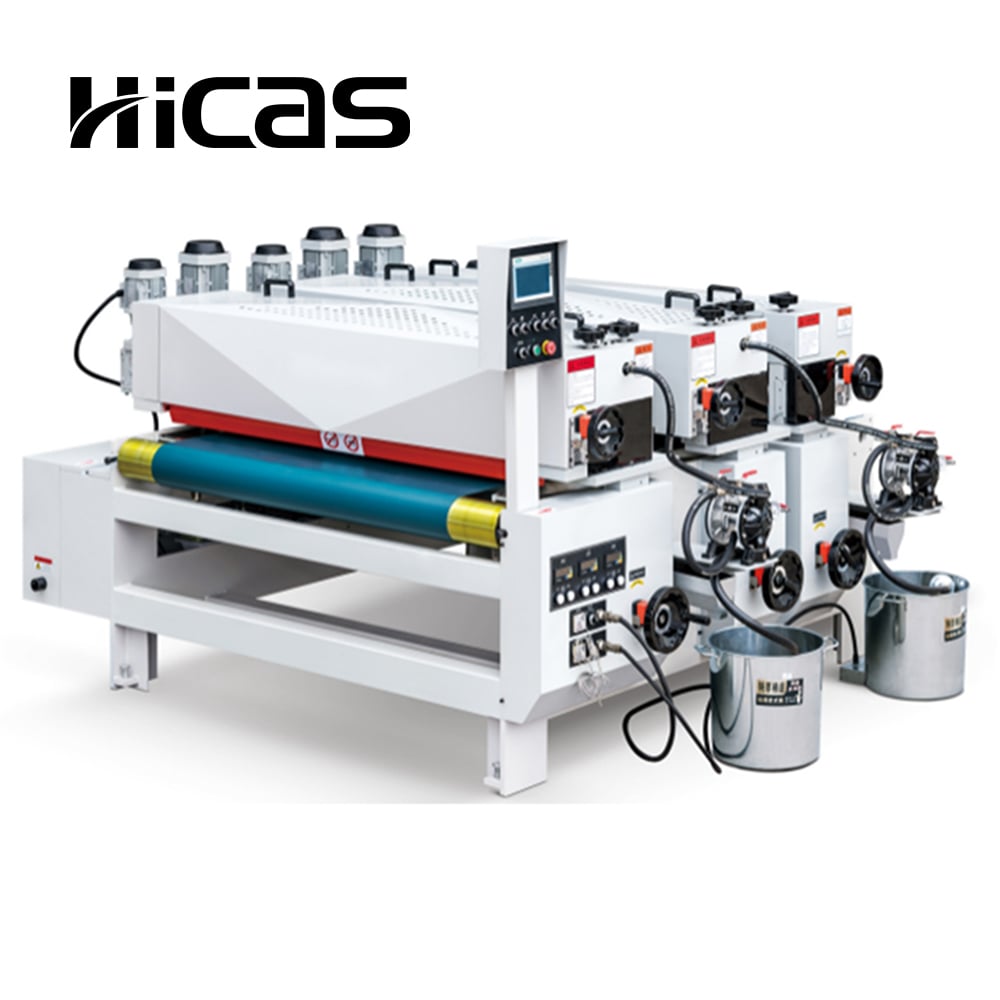
Roll wood coating machines transfer liquid coating from a reservoir onto the wood surface through one or more rotating rollers. The process is highly efficient for flat panels, boards, and sheet goods. In a typical roll coating line, the coating is metered precisely onto an application roller, which deposits a controlled film directly onto the panel surface as it passes through the machine. Because wood coating machines with roll technology apply coating through direct contact, material transfer efficiency is significantly higher than spray methods, often exceeding ninety percent.
Roll wood coating machines are the preferred choice for high-volume flat-panel production. Flooring manufacturers, panel producers, and kitchen cabinet makers processing large volumes of flat substrates benefit greatly from the throughput speed and coating uniformity that roll wood coating machines provide. Since there is minimal airborne material, roll wood coating machines create a cleaner working environment and reduce the need for complex extraction systems. They also tend to deliver more uniform wet film thickness across the full panel width, which is critical for UV-cured coatings that require precise film control.
Limitations of Roll Technology
Roll wood coating machines are essentially limited to flat or near-flat surfaces. Trying to coat profiled edges, raised panels, or three-dimensional components with roll wood coating machines results in incomplete coverage and inconsistent film build. The rollers in these wood coating machines require careful maintenance, including cleaning between coating changes and regular inspection for wear, which can affect film uniformity over time. Additionally, certain high-viscosity coatings or specialty finishes may not transfer well through roll wood coating machines, restricting formulation flexibility compared to spray systems.
Key Selection Criteria for Your Operation
Substrate Geometry and Product Mix
The geometry of your products is the single most decisive factor when choosing between spray and roll wood coating machines. If your product mix is dominated by flat panels, particleboard substrates, MDF sheets, or solid wood boards with no profiling, roll wood coating machines will deliver superior efficiency and consistency. If your production includes profiled components, assembled furniture parts, or architectural wood elements with complex shapes, spray wood coating machines are the practical choice. Many manufacturers operating mixed production lines invest in both types of wood coating machines, assigning each to the product categories where it performs optimally.
Throughput, Finish Quality, and Budget
Throughput requirements also shape which wood coating machines are appropriate. Roll wood coating machines typically support higher linear speeds for flat panel lines, making them the better fit when volume is the priority. Spray wood coating machines can be scaled by adding spray stations or robotic arms, but the capital investment per unit of throughput tends to be higher. From a finish quality perspective, spray wood coating machines generally achieve a smoother, more even appearance on complex parts, while roll wood coating machines deliver excellent consistency on flat substrates. Budget planning for wood coating machines should account not only for initial equipment cost but also for consumable usage rates, maintenance cycles, and the cost of coating material waste over the machine lifetime.
Environmental and Compliance Considerations
Both spray and roll wood coating machines must comply with relevant environmental and safety regulations. Spray wood coating machines require overspray management through filtration or water-wash systems, and solvent-based coatings demand proper ventilation and fire suppression measures. Roll wood coating machines present a cleaner operating environment but still require safe handling and disposal of coating materials. Evaluating wood coating machines within your regulatory framework ensures that your investment remains compliant and avoids costly retrofits after installation.
FAQ
Which wood coating machines are better for furniture with carved details?
Spray wood coating machines are significantly better suited for furniture with carved details, recessed panels, or three-dimensional profiles. Roll wood coating machines cannot reach into recesses or around edges, making spray technology the appropriate choice when surface complexity is a key factor.
Can wood coating machines handle both water-based and solvent-based coatings?
Most modern wood coating machines, whether spray or roll type, are designed to handle both water-based and solvent-based coatings, provided the internal components and seals are compatible with the coating chemistry. Always verify material compatibility with the machine manufacturer before switching coating systems on existing wood coating machines.
How do I calculate the return on investment for wood coating machines?
Calculating return on investment for wood coating machines involves comparing production throughput gains, coating material savings, labour cost reductions, and rework rate improvements against the total acquisition and operating costs. For high-volume flat-panel operations, roll wood coating machines typically offer faster payback, while spray wood coating machines justify their investment through quality improvements on complex components and reduced manual finishing labour.