
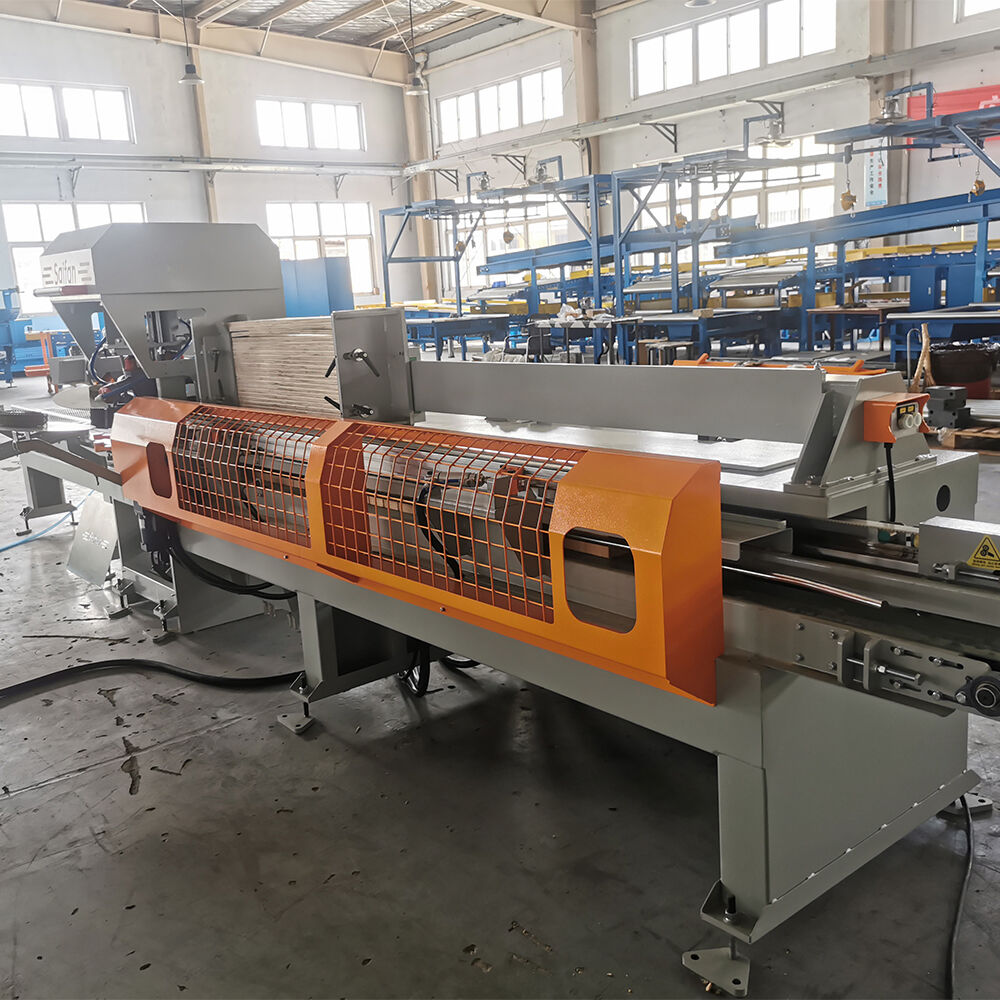
I. Operating Precautions
This is a high-performance and advanced equipment. Before operating it, you must carefully read the equipment manual to operate and maintain it properly in various working environments, ensuring maximum safety.
Ensure that the equipment is connected to the ground wire.
Carrying personal items can cause serious injuries. Before starting the machine, place watches, bracelets, etc. properly, fasten cuffs, tie up long hair, remove ties, and do not wear slippers.
Never process too small or too large workpieces. The feed speed of the workpiece should be determined according to specific circumstances and the equipment should not be used at excessive speed or overload.
Check if all safety protection devices are in place, then close all doors.
Before conducting cleaning or maintenance work, stop the machine, cut off the power supply, and use a dedicated warning sign to alert the surrounding workers.
Regularly clean the equipment to keep the internal working surfaces clean and the surrounding ground tidy. This is an important prerequisite for ensuring the processing accuracy of the equipment and extending its service life.
Regularly maintain the equipment.
II. Basic Operating Procedures
1. Place the nail plate in the guide slot, and ensure that the angle of the nail is consistent with the nail gun; you can loosen the screws at the bottom of the nail plate and rotate to adjust.
2. Connect the air source.
3. Adjust the pressure gauge to make the air pressure meet the required pressure range of the machine, and turn on the power control knob.
4. Close the main power supply in the distribution cabinet.
5. Turn on the power switch knob.
6. Rotate the hand/auto switch to the automatic state, then press the reset zero (press for 1 second and it will automatically return to zero and position to standby position); after each power-on, perform zero reset work.
7. Set the number of nails: nail quantity setting; parameter setting: board length, nail spacing, nail time, etc.
8. Put the board and wooden block into their respective storage bins; rotate the hand/auto switch to the automatic state, press the start button to start automatic production, and receive materials at the equipment discharge end.
9. After the work is completed, press the work stop button, and turn off the power switch knob.
III. Nailing Process
The plate pusher cylinder successively pushes the board to the plate feeding platform. When the board sensor detects that there is wood in the plate feeding platform, the plate feeding motor starts to work, driving the plate feeding pusher to push the wood board to the nailing position and move 5mm forward and then retreat 20mm; extend the block blocking cylinder, and the block feeding motor starts to send the wooden block to the nailing position. The wooden block sensor detects the wooden block and the motor stops, while the block alignment cylinder 1 and block alignment cylinder 2 extend simultaneously, aligning the wooden board and wooden block; the front pressing cylinder extends, aligning the wooden board and wooden block and retracting; then the block lifting cylinder extends, sending the wooden block to the nailing position, and the nail gun starts to nail; the block lifting cylinder, block blocking cylinder and block alignment cylinder 2 retract simultaneously; at the same time, block alignment cylinder 1 remains pressed, and the last block nailing is completed before retracting all at once.
During the second nailing, the block blocking cylinder retracts first, the plate feeding motor starts to work, driving the plate feeding pusher to push the wooden board to the nailing position; the block blocking cylinder extends, the block feeding motor starts to send the wooden block to the nailing position, the wooden block sensor detects the wooden block and the motor stops, while block alignment cylinder 2 extends, aligning the wooden board and wooden block; then the block lifting cylinder extends, sending the wooden block to the nailing position, the nail gun starts to nail; the block lifting cylinder, block blocking cylinder and block alignment cylinder 2 retract simultaneously; this cycle repeats until the last nailing is completed.
After the last nailing is completed, the discharge cylinder extends, and the finished product is pushed out and retracted. This cycle works continuously.
When the wooden block sensor detects no block, the buzzer alarms, indicating to add blocks; when the board sensor does not detect the board, the buzzer alarms, indicating to add the board.